

Gender & violence, Health services, HIV, Sexual & reproductive health, Substance use

Prospective Cohort Study of Programming to Promote Health Knowledge and Disease Prevention among Children in South Africa

2010

Brief Summary

Background

Many children in disadvantaged communities lack access to quality health education. Sports like football (soccer) offer a powerful way to reach young people where they are.

What Grassroot Soccer did

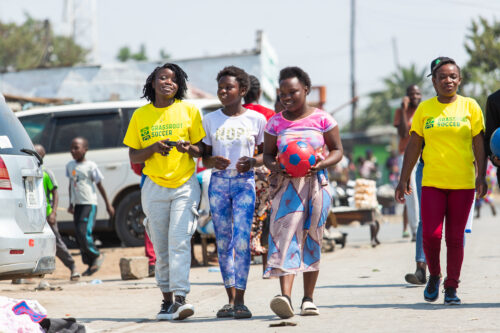
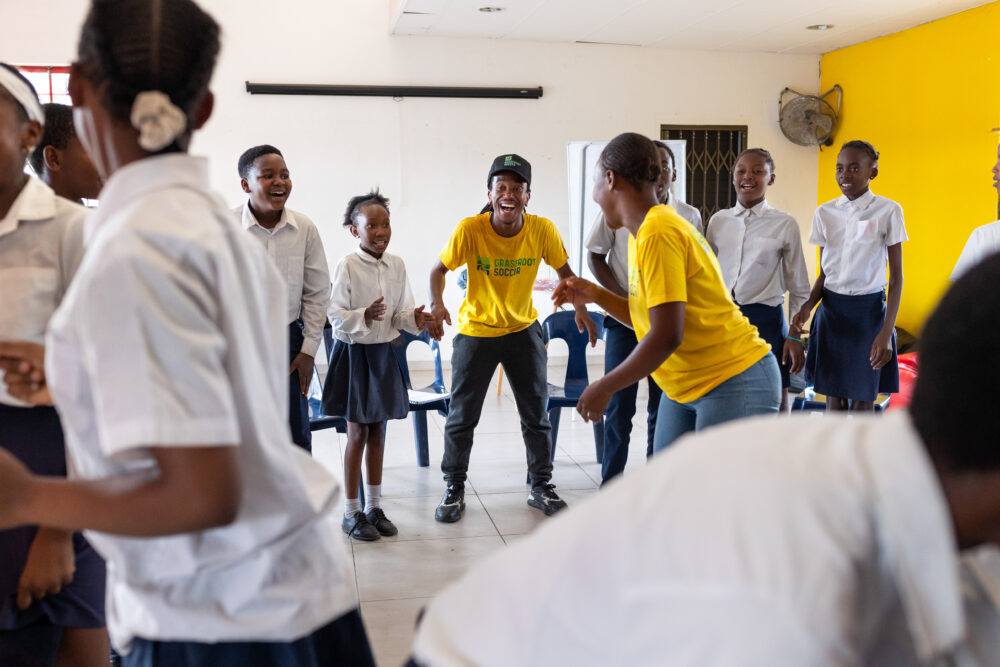
Grassroot Soccer collaborated with partners to implement Football for Health, combining football skills training with health education across schools in a South African township. Over 350 children in Grades 6 and 7 took part in weekly 90-minute sessions covering both football and disease prevention.

What the study found

Children in the program showed meaningful gains in health knowledge across a broad range of topics. Coaches also increased their health knowledge significantly, and participants rated the program highly.

Why this matters

This study shows that sport-based health education can be effectively delivered in under-resourced communities. With strong attendance, high satisfaction, and real knowledge gains, Football for Health offers a promising model for reaching more young people with life-saving health information.

DETAILED SUMMARY

Importance

  • Health education in childhood is essential for lifelong healthy behavior, but many children in disadvantaged communities lack access.
  • Football (soccer) is the world’s most popular sport and therefore provides an engaging and effective platform for promoting health awareness in children.

Objective

  • To develop, implement, and assess the acceptability and effectiveness of an interactive, health education program addressing the causes and prevention strategies of communicable and non-communicable diseases among children living in a township in South Africa.

Study details

  • Study design: Prospective cohort study with a control group
  • Data collection tools: Pre, post, and follow-up questionnaires, attendance registers
  • Participants: 370 children making up two intervention groups (125 from Grade 6, 131 from Grade 7), 114 students from Grade 7 making up the control group, and 23 coaches. Mean ages of 12.2–13.5 years across groups. Overall range across groups 11-16 years.
  • Implementation setting: Two primary schools in the Khayelitsha Township, South Africa
  • Study period: 3 years in total, but 10 month cohort study with an 11 week intervention delivered to experimental groups.

Intervention

  • Football for Health: 90-minute sessions split in half. The first half covered a specific football skill. The second half introduced facts about one of the diseases and how to prevent it.

Results

  • Attendance averaged 89.5% (Intervention Grade 7), 93.9% (Control Grade 7), and 93.4% (Intervention Grade 6)
  • Children’s questionnaire completion rates were 70.1% (Intervention Grade 7), 70.8% (Control Grade 7), and 86.8% (Intervention Grade 6)
  • Post-intervention, the Grade 7 intervention group showed significant knowledge gains in 9/20 health statements (11/20 at 3-month follow-up), compared with only 1/20 (post–Play Football) and 9/20 (post–Play Fair) in the control group. The Grade 6 intervention group showed significant improvement in 15/20 questions. p values ranged from p<0.05 to p<0.001.
  • Intervention coaches’ correct responses to 20 health-related questions increased from 75% to 95% (p < 0.001), while control coaches showed no significant change
  • Both groups rated the training highly; the intervention group reported higher overall satisfaction (mean = 4.5 vs 4.4) and more positive responses (94% vs 88%)

Conclusions and implications

  • The program demonstrates that it is possible to implement a football-based health-education program for children in Africa that achieves significant increases in health knowledge and that is well received by participants.
  • Future programs should follow-up on this study by implementing it with larger cohorts of children in other southern African countries using a similar structure.

Citation

DOI

Year: 2010

Authors: Fuller CW, Junge A, DeCelles J, Donald J, Jankelowitz R, Dvorak J

Fuller CW, Junge A, DeCelles J, Donald J, Jankelowitz R, Dvorak J. 'Football for Health'—a football-based health-promotion programme for children in South Africa: a parallel cohort study. Br J Sports Med. 2010;44(8):546-554. DOI: 10.1136/bjsm.2010.072223.

Other Resources