

Health services, Mental health, Resilience

Mixed methods pilot study of MindSKILLZ among adolescents in Kenya

2026

Brief Summary

Background

Young people in Eastern and Southern Africa face significant mental health challenges, but the vast majority have little or no access to mental health care or support services.

What Grassroot Soccer did

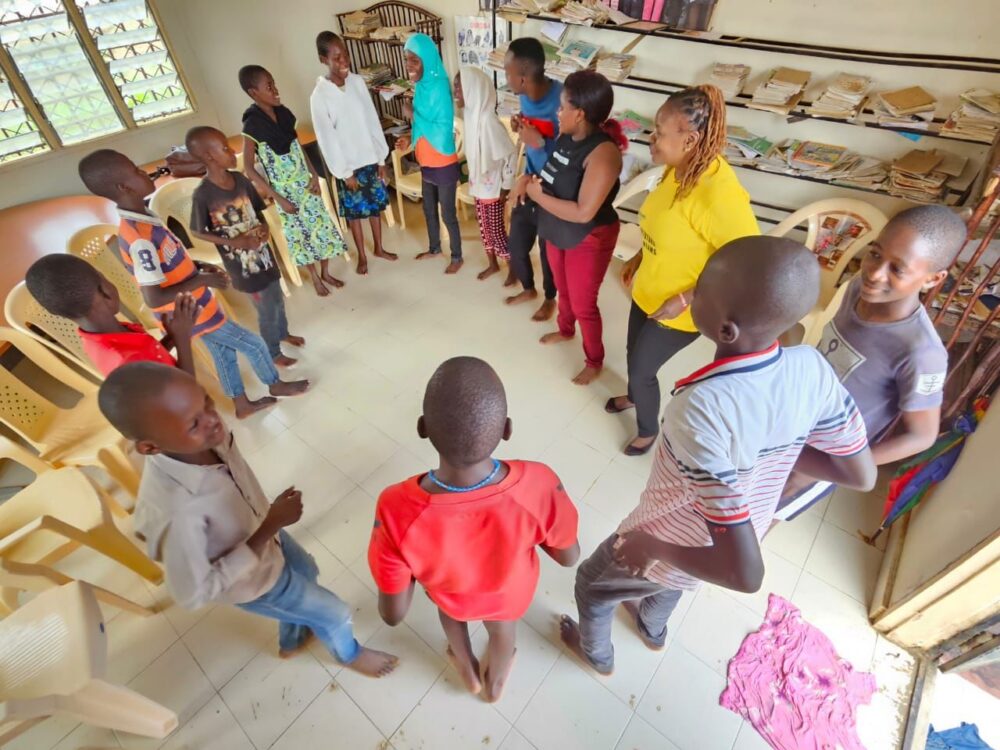
Grassroot Soccer implemented MindSKILLZ, a sport-based mental health program delivered by trained near-peer coaches, among 251 adolescents aged 10–14 years in Nairobi and Mombasa, Kenya.

What the study found

Participants showed positive trends across all mental health measures, including wellbeing, depression symptoms, stigma, and emotional regulation. Improvements continued to grow at follow-up. Coaches also reported gains in their own mental health knowledge and coping skills. The program was highly acceptable to participants and stakeholders alike.

Why this matters

MindSKILLZ shows promise as a scalable, low-resource approach to addressing the youth mental health gap in sub-Saharan Africa. Because it can be delivered by lay coaches rather than clinical professionals, it has strong potential for broad reach in settings where mental health services are scarce.

DETAILED SUMMARY

Importance

  • Young people in Eastern and Southern Africa face critical mental health challenges, and most have little or no access to mental health care and support.

Objective

  • To assess preliminary effects on adolescents’ mental health outcomes (assets, depression, emotional conduct problems, and wellbeing)
  • To explore effects on Coaches’ mental health
  • To understand program acceptability and potential sustainability and scalability

Study details

  • Study design: Mixed methods with interrupted time series (ITS) design
  • Data collection tools: Matched pre/post surveys (twice before and twice after), focus group discussions and key informant interviews with adolescent participants, Coaches, and key County Department of Health and implementing stakeholders post intervention
  • Participants: Male (n = 110) and female (n = 141) adolescents aged 10-14 years (n = 251)
  • Implementation setting: Nairobi (n = 121) and Mombasa (n = 130) counties of Kenya
  • Study period: August 2023 to March 2024

Intervention

  • MindSKILLZ is a sport-based mental health promotion and prevention intervention delivered to adolescents aged 10-14 years by trained near-peer mentors (Coaches).

Results

  • Surveys (n = 251) showed positive trends across all quantitative measures, though results were not statistically significant
  • Mental wellbeing, depression symptoms, mental health stigma, support seeking, emotional symptoms, and conduct problems improved from Time 2 (pre-intervention) to Time 3 (immediately post-intervention) – and these improvements mostly grew stronger at Time 4 (follow up)
  • Participants described enhanced coping skills and improved stress and anger management from MindSKILLZ
  • Coaches described increased mental health knowledge, coping skills, patience, cooperation, and self-esteem
  • MindSKILLZ was highly acceptable, with key stakeholders mostly highlighting its potential for sustainability and scale given its low resource demands

Conclusions and implications

  • Findings demonstrate high program acceptability and suggest promising effects on adolescent wellbeing and other key mental health outcomes
  • The intervention could potentially address a critical mental health service gap, as it can be universally delivered by lay providers

Citation

DOI

Year: 2026

Authors: Lee DEZ, Nyauchi B, Kihiu M, Kimathi R, Okoth EA, Chazara A, Barkley CK, Dallos A, Waruinge S, Oyaro P, Kithinji CM, Cerna-Turoff I, Cohen I, Merrill KG, Otiso L

Lee DEZ, Nyauchi B, Kihiu M, Kimathi R, Okoth EA, Chazara A, Barkley CK, Dallos A, Waruinge S, Oyaro P, Kithinji CM, Cerna-Turoff I, Cohen I, Merrill KG, Otiso L. The MindSKILLZ sport-based mental health promotion intervention for adolescents in Kenya: a mixed methods pilot study. Front Public Health. 2026;14:1746268. doi:10.3389/fpubh.2026.1746268.

Other Resources