

Gender & violence, Health services, HIV, Resilience, Sexual & reproductive health

Youth Participatory Action Research for SKILLZ Girl among adolescent girls in South Africa

2024

Brief Summary

Background

Adolescent girls and young women in South Africa face high rates of HIV, sexually transmitted infections, and unintended pregnancy. Despite this, young people are rarely involved in designing the health programs meant to serve them.

What Grassroot Soccer did

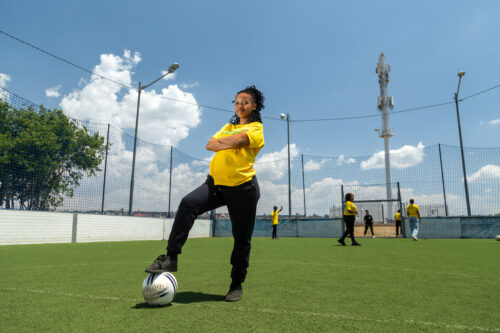
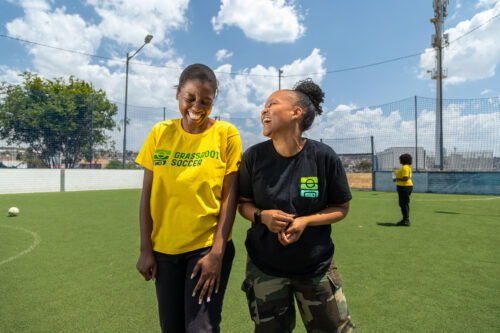
Grassroot Soccer delivered SKILLZ Girl, a sport-based sexual and reproductive health program for adolescent girls, in Cape Town secondary schools as part of a larger trial. Using Youth Participatory Action Research, researchers then trained nine girls aged 14–17 as Youth Investigators, who led workshops with 30 of their peers to explore how the program affected them and what they wanted from school-based health programming.

What the study found

Participants described greater self-esteem and confidence, a stronger sense of control over their own bodies, and a better understanding of healthy relationships. They also asked for girl-centered health information and services at school, including access to nurses.

Why this matters

Involving girls as co-researchers surfaced perspectives that standard interviews and surveys did not, while building their leadership skills. These findings support embedding youth-led research into future health programming to improve relevance and acceptability.

DETAILED SUMMARY

Importance

  • Adolescent girls and young women in South Africa continue to face high risks of HIV infection, STIs, and unintended pregnancy. This study addresses the gap in evidence on adolescent participation in intervention design and evaluation by employing youth participatory action research.

Objective

  • To understand how participatory research led by adolescents can inform and strengthen the design and delivery of school-based SRH interventions in Cape Town, South Africa.

Study details

  • Study design: Qualitative sub-study using Youth Participatory Action Research (YPAR), nested within a cluster randomized controlled trial
  • Data collection tools: Youth-led focus group discussions held within four YPAR workshops (one per school); participatory visual “dream program” activity; collaborative analysis workshops; observation and process notes; reflection with Youth Investigators
  • Participants: Nine Youth Investigators aged 14–17 years; 30 adolescent girl participants aged 13–17 years (grades 8–10), purposively sampled as high and low program attenders from two trial intervention schools and two control schools
  • Implementation setting: Four secondary schools in Cape Town, South Africa, drawn from the 36 schools in the parent trial (peri-urban)
  • Study period: YPAR sub-study conducted 2019–2020; parent cluster randomized trial conducted 2018–2019

Intervention

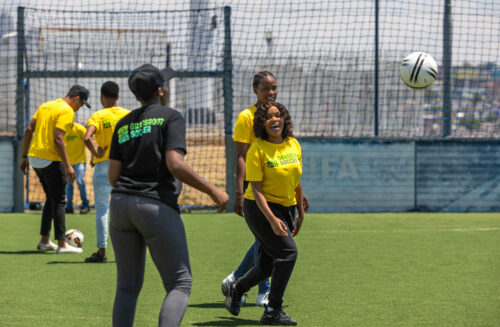
  • SKILLZ Girl (referred to as “SKILLZ” in the publication): Ten weekly, sport-based, gender-responsive SRH education sessions delivered during or after school hours by trained near-peer young female Coaches (<30 years). Sessions combined soccer activities with facilitated discussion on gender attitudes, norms, power, relationships, and SRH and rights themes, fostering girl-only spaces for dialogue and skill-building.

Results

  • Self-concept and bodily autonomy: Participants described increased self-esteem and confidence as a result of participation in SKILLZ sessions, along with a new sense of empowerment, bodily integrity, and body positivity.
  • Relationships: Learners reported greater ability to say “no” to unwanted sexual advances, a new understanding of abuse as unhealthy, and a capacity to redefine friendships and partner relationships.
  • Quote: “They gave us a positive influence on who we really are and what we can actually do as a group, and they gave us a chance of knowing that we can work together as schools and as girls to fight for what we deserve.” (YPAR School 2)
  • Demand for girl-centered services: Participants expressed a desire for school-based girls’ groups and access to nurses for sexual health information and services, and appreciated SRH information delivered in a girls-only setting rather than the mixed-gender national curriculum.
  • Method comparison: Traditional qualitative methods did not find that participants directly used health services as a result of the program, while youth-led focus groups elicited discussion of trusted information sources — a discrepancy the authors attribute in part to limited adolescent-responsive services in the area.

Conclusions and implications

  • Engaging adolescent girls as co-researchers builds agency, leadership, and ownership of health interventions. YPAR enriched understanding of program acceptability and highlighted demand for girl-led, school-based SRH programming.
  • Implications for Grassroot Soccer: Future programming can benefit from embedding participatory and youth-led research to enhance program design, acceptability, and sustainability.

Citation

DOI

Year: 2024

Authors: Coakley C, Lee D, Pike C, Myers L, Hartmann M, Oduro A, Ntlapo N, Bekker LG

Coakley C, Lee D, Pike C, Myers L, Hartmann M, Oduro A, Ntlapo N, Bekker LG, Youth Investigators of the Goals for Girls study. Realising agency: insights from participatory research with learners in a South African sexual and reproductive health programme. Frontiers in Public Health. 2024 Oct 9;12:1329425. DOI: 10.3389/fpubh.2024.1329425.

Other Resources