

Gender & violence, Health services, HIV, Resilience

Mixed Methods Study of SKILLZ to Promote Parental Engagement for HIV Testing Consent Among Adolescents in South Africa

2015

Brief Summary

Background

In the mid 2010s, only a third of adolescents aged 15-16 years in South Africa had ever been tested for HIV. Parental consent requirements and limited communication between families and schools created additional barriers to testing for younger adolescents.

What Grassroot Soccer did

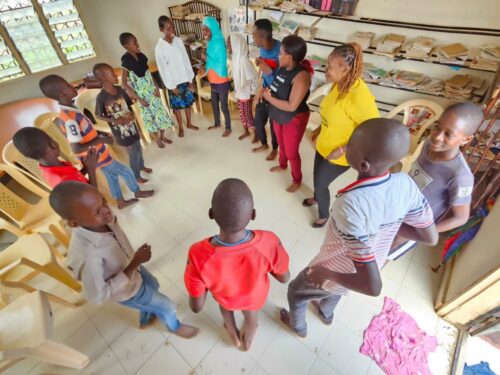
Grassroot Soccer implemented Bridging the Gap, a six-week sport-based HIV prevention program followed by coach-led home visits to engage parents and guardians, across two secondary schools in Alexandra township, South Africa, reaching nearly 900 adolescents.

What the study found

The vast majority of parents who received a home visit gave consent for their child to be tested, and nearly half of all participants went on to test for HIV.

Why this matters

Findings suggest that engaging families directly through home visits can meaningfully increase parental consent and HIV testing among younger adolescents, offering a promising model for school-based programs.

DETAILED SUMMARY

Importance

  • HIV counseling and testing is essential for HIV status awareness, promotes HIV/AIDS prevention-education, and facilitates access to ART, yet 33% of adolescents ages 15-16 in South Africa have ever tested for HIV. Parental consent requirements and limited communication between adolescents, parents, and schools create additional barriers. The Bridging the Gap (BtG) model seeks to increase adolescent HCT uptake by strengthening parental engagement.

Objective

  • To evaluate whether Bridging the Gap improves parental consent rates and HIV counseling and testing uptake among adolescents aged 12–16 years over six months in the Alexandra township of South Africa.

Study details

  • Study design: Mixed methods study; no control group
  • Data collection tools: Evaluation forms with Coaches; monitoring data on attendance, Home Visits, and HCT uptake; observation of HCT events; in-depth interviews with parents/guardians (n=7)
  • Participants: Female adolescents ages 12–16 years (three programs) and mixed-gender adolescents ages 12–16 years (one program) (mean age 14.75 years across all programs); Coaches; parents and guardians
  • Implementation setting: Two secondary schools in Alexandra township, Gauteng, South Africa (urban)
  • Study period: October 2014–March 2015

Intervention

  • Bridging the Gap (BtG): A six-week, sport-based HIV prevention program delivered by Coaches, followed by Coach-led parental engagement through phone calls and Home Visits. Home Visits involve face-to-face meetings with guardians to explain HIV counseling and testing, address concerns, encourage consent, and invite families to a final HCT event delivered with external partners.

Results

  • Sample: 899 participants (mean age 14.75 years).
  • Home Visits: Coaches conducted 607 Home Visits (68% of participants).
    • 93% of parents/guardians visited at least once gave HCT consent (n=565).
    • 87% of consent forms were signed by female parents/guardians.
  • HCT uptake: Overall, 47% of participants tested for HIV (n=425), with variation by program (24% to 85%).
  • Quote: “After the Coaches clarified my concerns… I felt it was safe and useful.” (Mother of female participant)

Conclusions and Implications

  • Focus group discussions and interviews suggest Home Visits are a feasible and effective strategy to increase parental consent and adolescent HIV counseling and testing uptake.
  • Parental availability and male caregiver involvement remain key challenges.

Citation

Year: 2014

Authors: Hershow RB, Mnculwane S, Shandokani L, Lobben T, DeCelles J, Barkley CK

Hershow RB, Mnculwane S, Shandokani L, Lobben T, DeCelles J, Barkley CK. Promoting parental engagement to increase HCT consent rates for adolescent girls: a mixed-methods pilot study in the Alexandra township [poster]. Presented at: 7th SA AIDS Conference; 2015 Jun 9-12; Durban, South Africa.

Other Resources