

Economic empowerment, Gender & violence, Health services, HIV, Resilience, Substance use

Feasibility Study of SKILLZ to Prevent Drug Abuse and HIV among Young Unemployed Men in South Africa

2016

Brief Summary

Background

Young men in South Africa face high rates of substance use and HIV risk but rarely engage with health clinics or traditional health programs.

What Grassroot Soccer did

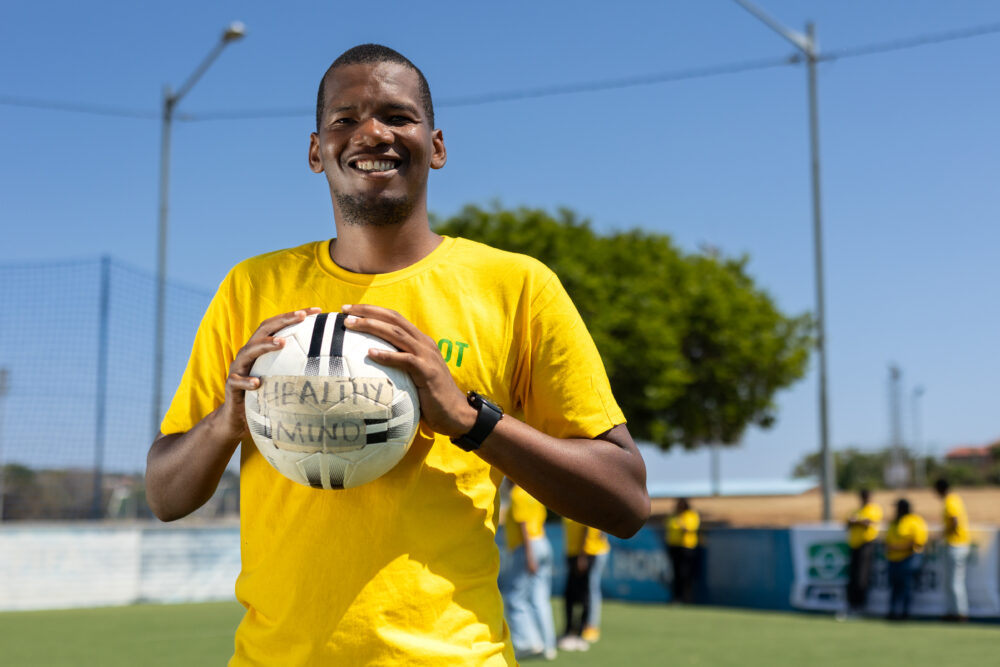
Grassroot Soccer piloted Champions League, a six-month program combining twice-weekly soccer practices, random drug testing, and vocational training for 142 unemployed men aged 18–25 in two Cape Town townships.

What the study found

Most participants attended regularly, and substance use declined over six months. Participants were also nearly three times more likely to be employed than those in the comparison group at follow-up.

Why this matters

Sport-based programming may be a promising way to reduce substance use and improve employment among young men who are difficult to reach through traditional health services.

DETAILED SUMMARY

Importance

  • Many young, South African men use alcohol and drugs and have multiple partners, but avoid health care settings which are the primary site for delivery of HIV intervention activities.

Objective

  • To identify the feasibility of engaging men in HIV testing and reducing substance use with soccer and vocational training programming.
  • To evaluate whether a soccer and vocational training intervention compared with a delayed control group improves HIV- and substance use-related outcomes among unemployed young men aged 18–25 years over a 6-month period in two urban neighborhoods in Cape Town, South Africa.

Study details

  • Study design: Pilot randomized controlled trial with a delayed control condition
  • Data collection tools: Baseline and 6-month follow up questionnaires (via mobile phone), rapid diagnostic tests (RDT) for alcohol and drugs, attendance registers, coach observation logs
  • Participants: Unemployed men aged 18–25 years (mean age 21.9 years across intervention and control groups) not living with HIV (n=142; intervention group n=72; delayed control group n=70)
  • Implementation setting: Two Cape Town neighborhoods similar in size (450–600 households) within 5 km of a health clinic (urban)
  • Study period: Baseline to 6-month follow-up

Intervention

  • Champions League Pilot with added vocational training: Six-month intervention consisting of twice-weekly afternoon soccer practices and Saturday matches led by trained community coaches, random RDTs for alcohol and drug use, and a behavioral point system rewarding punctual, drug-free attendance. Top-scoring participants (n = 35) accessed an eight-week vocational training course in electrical or mechanical engineering at a local college.

Results

  • Enrolled: 98% of eligible young men (n=141). 95% (n=134) were reassessed at 6 months.
  • Engagement: 85% attended at least one practice (Mean=42.3, Standard Deviation=34.4); 71% attended regularly
  • Employment: 28.9% of intervention participants were employed vs 9.9% in the delayed control group (p<.01).
  • Substance use: Weighted index of substance use and serious drug use both decreased (p < .07 and p < .07, respectively); methamphetamine use decreased (p = .03).
  • HIV testing: Similar across groups; “While drug testing was acceptable and young men discussed HIV testing, the self-reported rates of HIV testing did not improve.”
  • Violence: Weak evidence that reports of forcing women to have sex while intoxicated tended to be lower in the intervention condition (p < .08).

Conclusions and implications

  • Despite the study’s limitations, the pilot soccer intervention with random rapid diagnostic tests for alcohol and drugs was engaging and decreased some substance abuse over 6 months.

Citation

DOI

Authors: Rotheram-Borus MJ, Tomlinson M, Durkin A, Baird K, DeCelles J, Swendeman D

Rotheram-Borus MJ, Tomlinson M, Durkin A, Baird K, DeCelles J, Swendeman D. Feasibility of using soccer and job training to prevent drug abuse and HIV. AIDS and Behavior. 2016 Sep;20(9):1841-50. DOI: 10.1007/s10461-015-1262-0.

Other Resources