

Health services, HIV
Cluster Randomized Controlled Trial of SKILLZ to Increase Voluntary Medical Male Circumcision Uptake Among Adult Male Soccer Players in Zimbabwe
2014
Brief Summary
Background
Voluntary medical male circumcision can substantially reduce the risk of HIV transmission, but uptake in Zimbabwe had fallen short of national targets in the 2000s, highlighting the need for new approaches to reach men.
What Grassroot Soccer did
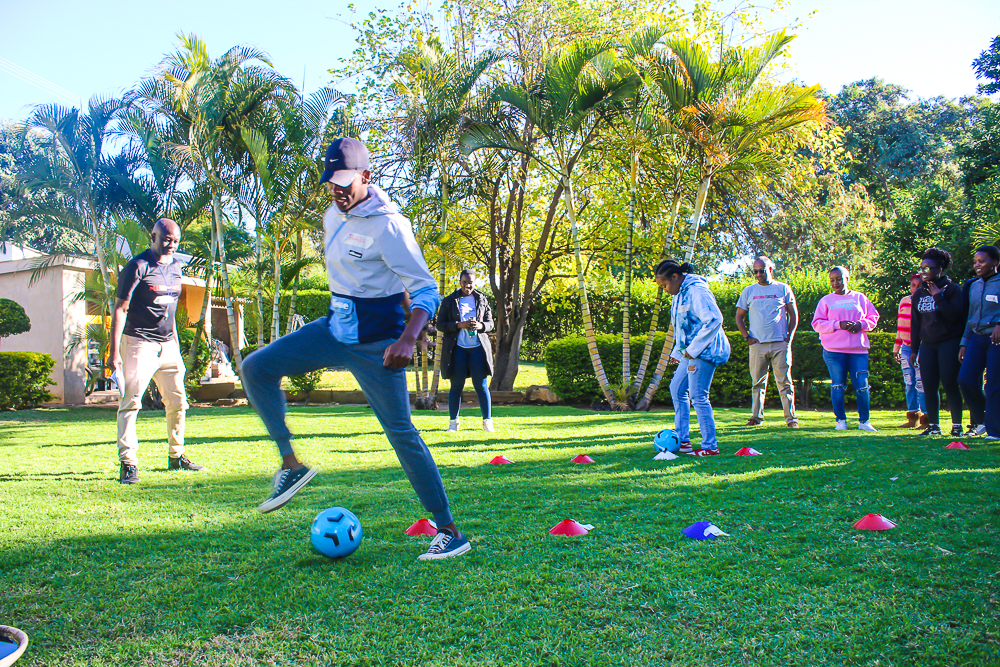
Grassroot Soccer's Make the Cut program, which is a 60-minute sport-based session educating men about the benefits of voluntary medical male circumcision, was tested across 47 community soccer teams in Bulawayo, Zimbabwe with over 700 adult male players.
What the study found
Men in the program were more likely to seek voluntary medical male circumcision than those who did not receive it, though overall uptake remained low in both groups.
Why this matters
Findings suggest that sport-based approaches can meaningfully increase demand for voluntary medical male circumcision, with potential to contribute to HIV prevention efforts when combined with broader strategies to improve access and uptake.
DETAILED SUMMARY
Importance
- Studies have shown that voluntary medical male circumcision (VMMC) can reduce female-to-male transmission of HIV by 50-60%. Zimbabwe had a goal of reaching 80% VMMC coverage among HIV-negative 15-29 year-old men by 2015, but uptake was lower than hoped, highlighting the need for effective demand creation approaches.
Objective
- To evaluate whether Make The Cut compared with no intervention increases voluntary medical male circumcision uptake among adult male soccer players over 4.5 months in Bulawayo, Zimbabwe.
Study details
- Study design: Cluster randomized controlled trial
- Data collection tools: Baseline questionnaires; clinic register data cross-linked with consent forms; demographic data
- Participants: Adult men aged 18–45 years, male soccer players (n = 735 enrolled; median age 24 years)
- Implementation setting: Forty-seven community soccer teams in Bulawayo, Zimbabwe (urban)
- Study period: November 2012–March 2013
Intervention
- Make the Cut: 60-minute, sport based intervention aiming to educate men about the benefits of VMMC and motivate circumcision. Two intervention arms with sessions being delivered by trained professional soccer players or trained non-celebrity facilitators.
Results
- Sample: 735 men enrolled; 670 completed baseline questionnaires; 47 teams.
- Primary outcome: Results demonstrate that 3.5% of intervention participants and 0.4% of control participants took up voluntary medical male circumcision.
- Effect size: In the intention-to-treat analysis adjusted for clustering, the odds of uptake were higher in the intervention group compared with the control group (OR = 9.81, 95% CI = 0.93–103.2, p = 0.057).
- Uncircumcised subgroup: Among men reporting being uncircumcised at baseline (n = 522), uptake was 4.8% in the intervention group versus 0.5% in the control group (OR = 10.28, 95% CI = 0.91–115.7, p = 0.059).
- Facilitator comparison: Uptake did not differ meaningfully between delivery by professional players (3.8%) and non-celebrity facilitators (5.9%) (OR = 0.58, 95% CI = 0.11–3.02).
Conclusions and Implications
- Make The Cut shows a strong relative effect and modest absolute effect in increasing voluntary medical male circumcision uptake among adult male soccer players.
Citation
Year: 2014
Authors: Kaufman ZA, DeCelles J, Bhauti K, Weiss HA, Hatzold K, Chaibva C, Ross DA
Kaufman ZA, DeCelles J, Bhauti K, Weiss HA, Hatzold K, Chaibva C, Ross DA. A sport-based intervention to increase uptake of voluntary medical male circumcision among adult male football players: results from a cluster-randomised trial in Bulawayo, Zimbabwe [poster]. Presented at: 20th International AIDS Conference (AIDS 2014); 2014 Jul 20-25; Melbourne, Australia.
Partners
Population Services International Zimbabwe
National University of Science and Technology Bulawayo
London School of Hygiene and Tropical Medicine
Zimbabwe Football Association
Funder
Bill and Melinda Gates Foundation
Doris Duke Charitable Foundation

Other Resources
Cross-sectional study of Digital MindSKILLZ among mobile phone users in six sub-Saharan African countries
Cluster randomized controlled trial of SKILLZ Girl among adolescent girls in Zambia: Effects on sexual and reproductive empowerment