Gender & violence, Health communication, HIV

Cluster randomized controlled trial of Generation SKILLZ among adolescents in South Africa

2014

Brief Summary

Background

Despite progress in increasing uptake of HIV testing and treatment, preventing new HIV infections remains a challenge for South Africa, particularly among adolescents in informal settlements who face high rates of sexual risk behavior and gender-based violence.

What Grassroot Soccer did

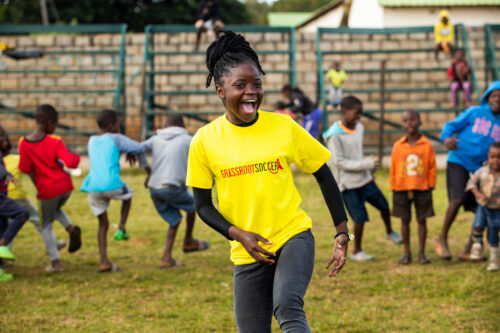
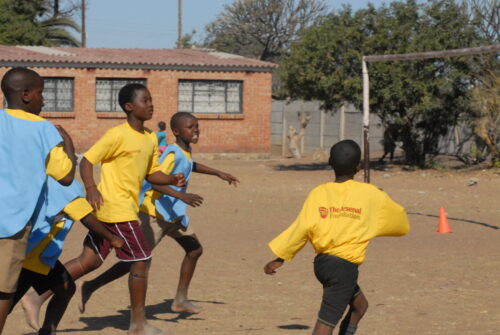
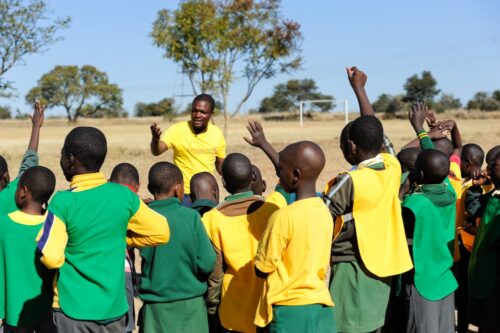
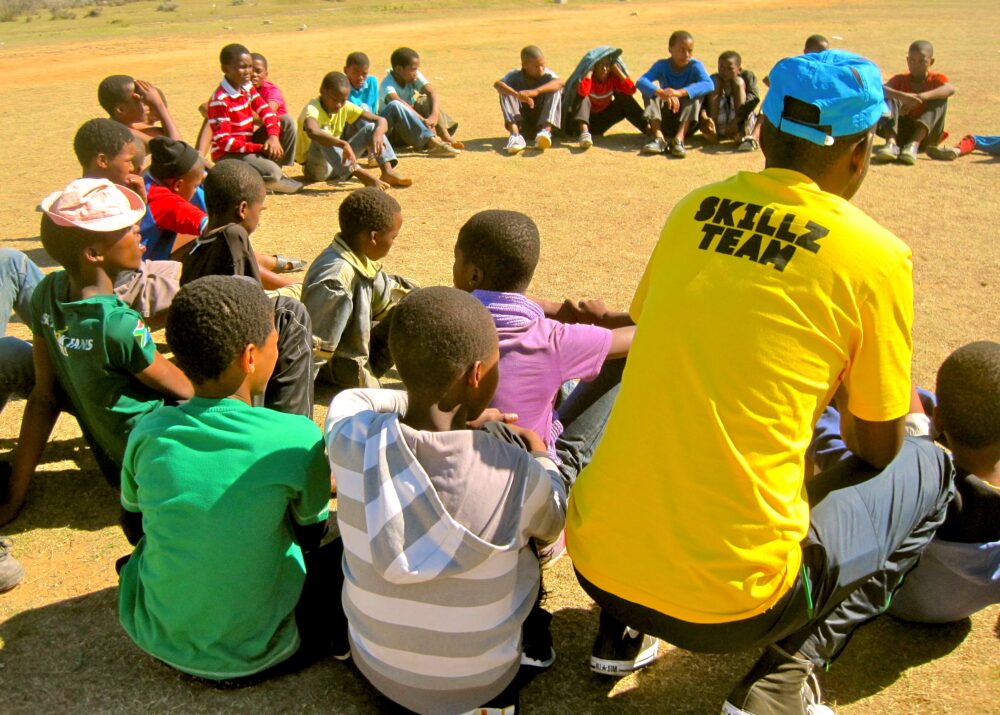
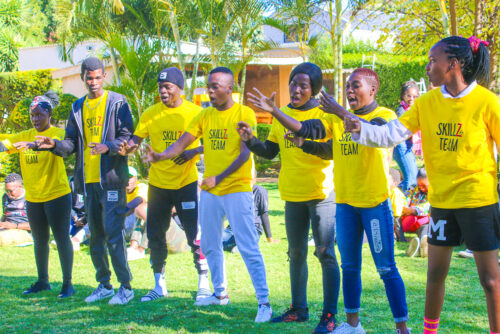
Grassroot Soccer, together with the London School of Hygiene & Tropical Medicine and the Wits Reproductive Health and HIV Institute, launched the GOAL Trial, a three-year cluster-randomized controlled trial testing Generation SKILLZ, an eleven-session sport-based HIV prevention program, with and without a complementary 12-month biweekly SMS messaging campaign, among more than 4,400 Grade 9 learners across 46 schools in informal settlements in Cape Town and Port Elizabeth.

What the study found

At midline (8–11 months post-intervention), there was strong evidence that Generation SKILLZ improved HIV-related knowledge among both males and females and increased HIV testing uptake among males. However, there was also evidence of an increase in reported multiple partnerships and physical intimate-partner violence perpetration among males. Adding the SMS campaign to the program reduced reported multiple partnerships among males and females combined.

Why this matters

These mixed results suggest sport-based HIV prevention programs can meaningfully improve knowledge and testing uptake, but may not achieve all intended behavioral objectives in their first year, and highlight the potential value of complementary SMS messaging as a sexual health promotion tool.

DETAILED SUMMARY

Importance

  • Despite progress in increasing uptake of HIV testing and treatment, preventing new HIV infections remains a challenge for South Africa, which has more than 6.4 million people living with HIV and approximately 469,000 new infections per year, roughly 30% of which occur among 15- to 24-year-olds.
  • Interest in using sport to promote health has grown internationally, and SMS messaging is increasingly used in health promotion, but rigorous randomized evidence supporting the effectiveness of sport-based HIV prevention, and of complementary SMS campaigns, had remained limited.

Objective

  • To assess the effectiveness of Generation SKILLZ, a sport-based HIV prevention intervention, with and without an accompanying SMS campaign, in reducing reported age-disparate sex, multiple sexual partnerships, and rape perpetration, and in improving HIV-related knowledge and attitudes, among adolescents in South African informal settlement schools.

Study details

  • Study design: Cluster randomized controlled trial (2×2 factorial design)
  • Data collection tools: Self-administered questionnaires completed on touchscreen mobile phones at baseline and midline (8–11 months post-intervention)
  • Participants: 4,485 Grade 9 learners at baseline (mean age 15.66 years, SD 1.39; median age 15 years); 3,442 participants retained at midline (median age 16 years)
  • Implementation setting: 46 secondary schools in informal settlements in Cape Town and Port Elizabeth, South Africa (urban)
  • Study period: 2012–2014 (baseline in 2012; midline follow-up in 2013; endline planned for 2014)

Intervention

  • Generation SKILLZ: Grassroot Soccer’s eleven-session sport-based HIV prevention curriculum. Schools were randomized to receive the intervention or standard life-orientation classes only, and intervention schools were further randomized to receive, or not receive, a 12-month biweekly SMS campaign reinforcing program messaging.

Results

  • 4,485 learners completed the baseline questionnaire across 46 schools; 3,442 (70.5%) were retained at midline, with 1,309 (29.5%) lost to follow-up. Riskier, older, and Cape Town participants had higher odds of attrition.
  • There was very strong evidence of a positive effect of the intervention on HIV-related knowledge among both males and females (β=0.39, 95% CI: 0.25–0.53), on reported ever testing for HIV among males (OR=1.38, 95% CI: 1.11–1.72), and on reported HIV testing in the last 12 months among males (OR=1.47, 95% CI: 1.13–1.90).
  • There was strong evidence of a negative effect on reported multiple partnerships in the last six months among males (OR=1.34, 95% CI: 1.08–1.66) and on reported ever perpetrating physical intimate-partner violence among males (OR=1.27, 95% CI: 1.00–1.60).
  • Within the intervention arm, there was strong evidence that the SMS campaign reduced reported multiple partnerships in the last six months among males and females combined (OR=0.75, 95% CI: 0.58–0.96); however, comparing SMS schools directly to control schools, no evidence of a difference was found on any of the three primary behavioral outcomes (age-disparate sex, multiple partnerships, or rape perpetration).

Conclusions and implications

  • Midline results suggested the Generation SKILLZ intervention was not effective in achieving its primary behavioral objectives in the first year, despite increases in HIV-related knowledge and self-reported HIV testing. Findings helped inform Grassroot Soccer’s decision to de-implement Generation SKILLZ.
  • Findings provided further evidence that targeted SMS messaging may be an effective tool for sexual health promotion; further qualitative research was planned to investigate why the intervention may have led to an increase in certain risk behaviors, including hypothesized links to increased social media use and coach-participant dynamics.

Citation

DOI

Year: 2014

Authors: Kaufman ZA

Kaufman ZA. The GOAL Trial: sport-based HIV prevention in South African schools [PhD dissertation]. London School of Hygiene & Tropical Medicine; 2014. doi:10.17037/PUBS.01941262.

Other Resources

View All Resources