Health services, HIV, Sexual & reproductive health
Cost study of SKILLZ Girl among adolescent girls in South Africa
2022
Brief Summary
Background
Adolescent girls in South Africa face high rates of HIV, sexually transmitted infections, and unintended pregnancy. Schools are a promising setting for sexual and reproductive health programs, but the costs of running these programs are rarely studied or reported.
What Grassroot Soccer did
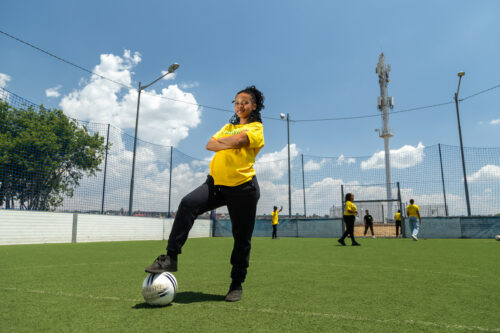
Grassroot Soccer delivered SKILLZ Girl, a sport-based sexual and reproductive health program for adolescent girls, in secondary schools in peri-urban Cape Town, South Africa, as part of a larger trial. Researchers tracked what it cost to run the program for one full academic year in 2019, covering 761 girls aged 14–17 across nine schools.
What the study found
Reaching one girl with the program cost about US$69 and about US$99 for a girl who completed the full curriculum. Transport was the single largest expense, while staff costs made up a small share of the total. Costs rose substantially when fewer girls attended than planned.
Why this matters
The cost per girl reached fell within the range reported for similar sexuality education programs elsewhere. Modelling suggested that delivering the program through public-sector school structures would be the least costly route to scale, though province-wide expansion would cost more than current government life-skills funding allows.
DETAILED SUMMARY
Importance
- Adolescent girls in South Africa face persistently high rates of HIV infection, sexually transmitted infections, and unintended pregnancy. Schools offer an important platform for adolescent sexual and reproductive health (SRH) programming, but the cost of implementing participatory, gender-responsive curricula remains under-documented.
Objective
- To estimate the costs and key cost drivers of SKILLZ Girl among adolescent girls over two academic terms in secondary schools in peri-urban Cape Town, South Africa.
Study details
- Study design: Cost study conducted alongside a cluster randomized controlled trial, from a provider (multi-sector) perspective using a mixed-methods costing approach
- Data collection tools: Financial expenditure tracking; program records; attendance registers; time allocation logs; one-on-one interviews with program implementers; non-participant observation of the intervention
- Participants: Adolescent girls aged 14–17 years (grades 8–10); Coaches (female, 18–30 years); Grassroot Soccer program staff
- Implementation setting: 38 secondary schools in the Klipfontein/Mitchells Plain health sub-district, Cape Town, South Africa (peri-urban); the cost analysis covers the nine intervention-arm schools in Cohort 2
- Study period: Costs analysed for 2019, a full academic year; the parent trial ran January 2018 to December 2019
Intervention
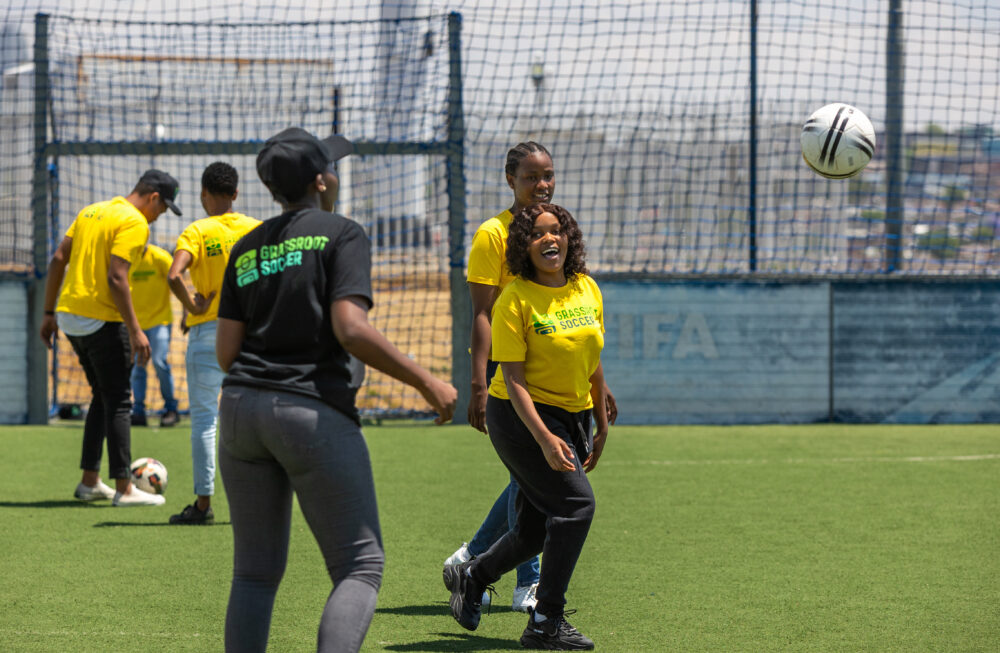
- SKILLZ Girl (referred to as “SKILLZ” or “SKILLZ Health for Girls” in the publication): Ten weekly sessions over two school terms, delivered directly after school by trained young adult female near-peer Coaches (“SKILLZ Caring Coaches,” n = 10) with one master coach, to groups of up to 20 participants. Sessions combined sport and SRH content. Learner contact time averaged 1 hour 7 minutes per session (range 45-90 minutes).
Results
- Sample: 761 learners enrolled in the intervention arm across nine schools in Cohort 2 (2019). Program coverage, defined as attending at least one session, averaged 72%.
- Total implementation cost: The total 1-year cost of implementing the SKILLZ program was $75,183.59.
- Average costs: Cost per session (20 learners): $198.37. Cost per learner per session: $9.92. Cost per learner reached (met graduation requirement of 7 of 10 sessions): $69.43. Cost per learner completing the full curriculum: $99.19. Cost per school: $8,353.73.
- Cost drivers: Recurrent operational costs excluding personnel made up 82% of total costs; learner-facing personnel accounted for only 12%. Transport was the single largest driver, at 74% of site-level delivery costs (53% staff, 21% participants).
- Attendance and sensitivity: Actual attendance averaged 47% across sessions, lower than expected, raising per-protocol costs to $408.71 per session and $150.58 per learner reached, versus $198.37 and $69.43 under intention-to-treat.
- Benchmarking: The intention-to-treat cost per learner reached fell within the range reported for similar programs — $50 in a Kenyan and $160 in an Indonesian pilot sexuality education program.
- Scale-up cost: Three-year Western Cape scale-up scenarios ranged from $1,874,630 to $21,245,812. The base-case scenario ($5,311,453) exceeded the provincial conditional grant allocation for HIV and AIDS life-skills education but was comparable to expenditure on a similar donor-funded provincial program. A public-sector scenario was the least costly, a 36% decrease from base case.
Conclusions and implications
- Costs for SKILLZ Girl fell within the range reported for comparable adolescent sexual health education programs. Costs were sensitive to attendance, and the low personnel cost share may be advantageous for scale-up.
- Integration within the school program offers the most potential for scale-up and sustainability. Future planning should consider cost-saving measures such as centralized Coach training and partnerships with the public health and education sectors to reduce recurrent costs, particularly transport.
Citation
Year: 2022
Authors: Bango F, Pike C, Coakley C, Bekker LG, Cleary S
Bango F, Pike C, Coakley C, Bekker LG, Cleary S. A cost analysis of a sports-based sexual health education programme for adolescent girls in South African schools. Health Policy and Planning. 2022;37(10):1236–47. DOI: 10.1093/heapol/czac082.
Partners
University of Cape Town (Health Economics Unit, School of Public Health and Family Medicine
Desmond Tutu (HIV Centre)
Grassroot Soccer
Funder
ViiV Healthcare
Other Resources
Lessons learned implementing SKILLZ Girl in a cluster randomized controlled trial in South Africa