

HIV
Quasi-experimental study of a SKILLZ adaptation among adolescents in the Dominican Republic
2012
Brief Summary
Background
Young people in the Dominican Republic, particularly in Haitian migrant communities, face significant barriers to HIV education and prevention. In the 2010s, most research on sport-based HIV programs had been conducted only in Africa.
What Grassroot Soccer did
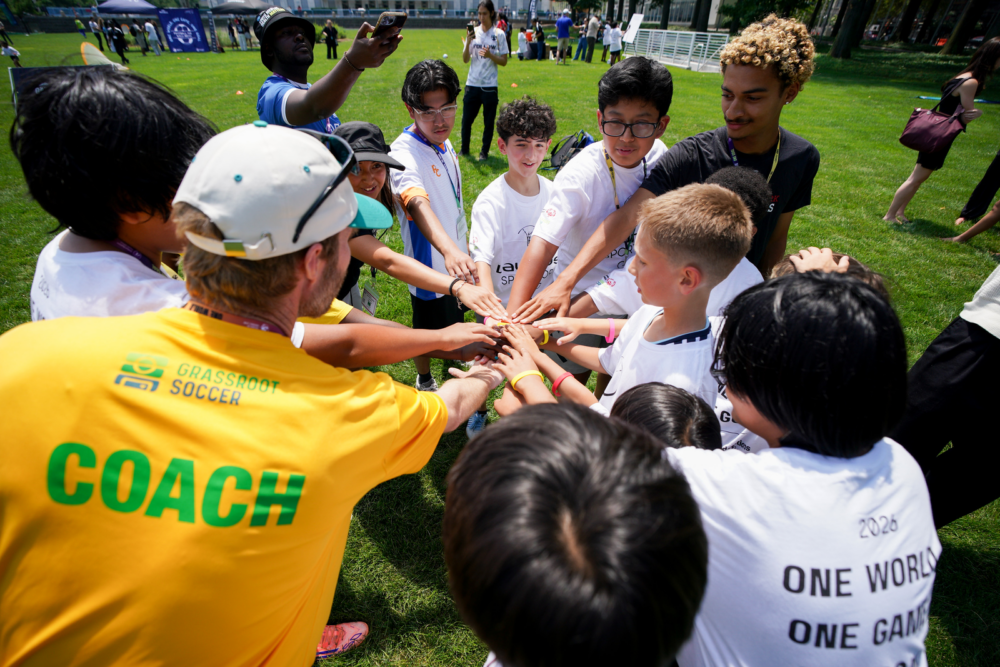
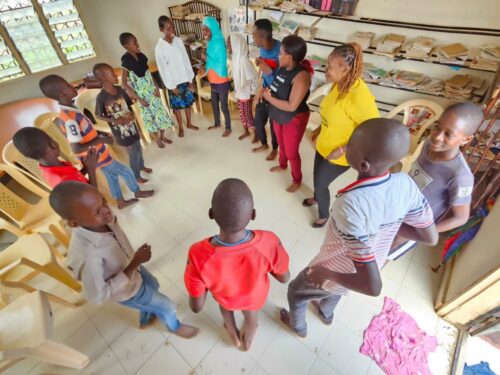
An adapted SKILLZ intervention was implemented in six predominantly Haitian communities in the Dominican Republic. Over five days, adolescents aged 10–20 participated in roughly 10 hours of soccer-based, interactive HIV education delivered by local community role models.
What the study found
Immediately after the program, participants showed stronger HIV knowledge, communication habits, and behavioral intentions than the control group across nearly all measures. Some gains diminished at the four-month follow-up, though differences remained on several key indicators.
Why this matters
This study extends evidence for sport-based HIV prevention beyond Africa, suggesting SKILLZ can be successfully adapted to Caribbean contexts and pointing to the value of ongoing reinforcement to sustain knowledge gains over time.
DETAILED SUMMARY
Importance
- Although previous research showed that sports can be an effective tool for engaging youth in HIV prevention, these studies were conducted exclusively within the African continent.
- This study explores the implementation of a sports-based HIV education intervention in a Caribbean context.
Objective
- To assess whether an adaptation of SKILLZ, in comparison with a control group, is effective in improving HIV-related knowledge, communication habits and behavioral intentions over a 4 month time period among youth aged 10–20 years living in six predominantly Haitian communities in the Puerto Plata province of the Dominican Republic
Study details
- Study design: Quasi-experimental design with qualitative methods
- Data collection tools: 397 total structured interviews were completed. 164 interviews were conducted pre-intervention. 140 interviews were conducted post-interview (n=99 intervention group; n=41 control group). 93 interviews were conducted at the 4 month follow up period (n=75 intervention group; n=18 control group).
- Participants: 164 mixed gender adolescents aged 10-20 years old residing in predominantly Haitian communities (four bateyas and two barrios) in the northern Dominican Republic; mean ages were 13.5 years in the intervention group and 14.4 years in the control group
- Implementation setting: Programming delivered after school at community centers
- Study period: 4 months
Intervention
- Adaptation of SKILLZ: Utilized community role models – local soccer players – to deliver programming centered on adolescent HIV education. The intervention was provided in a 5 day camp format with roughly 10 hours of total programming. The camp was divided into 13 interactive activities that emphasized discovery-based learning.
Results
- Immediately post-intervention, participants in the intervention group scored higher than the control group on all 15 indicators with significant differences noted in 12 indicators after the Bonferroni adjustment (p < 0.0003).
- At 4 month follow up, intervention group participants scored higher than their control group counterparts on all 15 indicators, but statistically significant differences were only noted in 3 indicators (1 knowledge indicator, 2 attitude indicators).
- The intervention group regressed in their correct response rate to knowledge questions at 4 month follow up. At 4 month follow up, the intervention group provided 78% correct responses compared to 83% immediately post-intervention.
Conclusions and implications
- The findings support prior research performed in sub-Saharan African settings which demonstrated the potential effectiveness of sports-based HIV prevention.
- Results demonstrate that a sports-based intervention can retain its effect on knowledge, attitudes and communication when adapted to a Caribbean context.
Citation
Year: 2012
Authors: Kaufman ZA, Welsch RL, Erickson JD, Craig S, Adams LV, Ross DA
Kaufman ZA, Welsch RL, Erickson JD, Craig S, Adams LV, Ross DA. Effectiveness of a sports-based HIV prevention intervention in the Dominican Republic: a quasi-experimental study. AIDS Care. 2012 Mar 1;24(3):377-85. DOI: 10.1080/09540121.2011.608789.
Partners
Dartmouth College
London School of Hygiene and Tropical Medicine
Franklin Pierce University
University of Vermont
Dartmouth Medical School
the Batey Libertad Coalition
the DREAM Project
Funder
Kaminsky Family Fund through Dartmouth College's Dean of Faculty
the John Sloan Dickey Center for International Understanding
the Fundación de Libertad
the Lintilhac Foundation
the William Jewett Tucker Foundation

Other Resources
Cross-sectional study of Digital MindSKILLZ among mobile phone users in six sub-Saharan African countries
Cluster randomized controlled trial of SKILLZ Girl among adolescent girls in Zambia: Effects on sexual and reproductive empowerment