

Gender & violence, Health services, HIV, Sexual & reproductive health, Substance use

Pre/post intervention study of FIFA’s “11 for Health” Program to Improve Health Knowledge among Children in Mauritius and Zimbabwe

2011

Brief Summary

Background

Communicable and non-communicable diseases are leading causes of illness across Africa. However, many children lack access to quality health education. Scalable, sport-based approaches offer a promising way to close this gap.

What Grassroot Soccer did

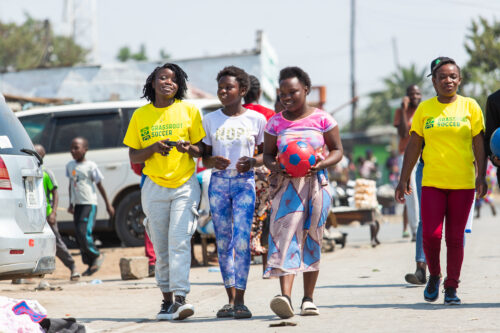
Grassroot Soccer collaborated with FIFA to deliver “11 for Health” across secondary schools in Mauritius and community settings in Zimbabwe. Nearly 800 children aged 10–15 completed eleven 90-minute sessions combining football (soccer) skills with health education, delivered by trained coach pairs.

What the study found

Health knowledge scores increased substantially in both countries, with significant improvements across nearly all evaluated health topics. Boys and girls benefited equally, and the vast majority of participants found sessions easy to understand and enjoyable.

Why this matters

Findings suggest that sport-based health education can be delivered effectively across different countries and settings, reaching both boys and girls, with potential for wide-scale implementation across Africa.

DETAILED SUMMARY

Importance

  • Communicable and non-communicable diseases cause substantial morbidity in Africa and school- and community-based health promotion are WHO priorities. Scalable, sport-based health education programmes for children have had limited multi-country evaluation.

Objective

  • To evaluate whether the “11 for Health” program improves children’s health knowledge among mixed-gender adolescents over the intervention period in school and out-of-school settings

Study details

  • Study design: Pre/post intervention study; no control group
  • Data collection tools: Pre- and post-questionnaires; attendance registers
  • Participants: Adolescents aged 12–15 years in Mauritius with a mean of 13 years and 10–14 years in Zimbabwe with a mean of 11.5 years; mixed gender; not specified by HIV status, coaches and teachers delivered sessions
  • Implementation setting: 11 secondary schools across Mauritius (in-school; urban/mixed); out-of-school community groups in Bulawayo, Zimbabwe (urban/peri-urban)
  • Study period: Intervention delivered Feb–Jun 2010 and outcomes assessed immediately post intervention.

Intervention

  • Eleven 90-minute sessions (each = 45 min Play Football + 45 min Play Fair); usually delivered by a male/female Coach pair to groups for around 20 children; teacher and Coach training (5-day) and guidance manual provided

Results

  • 389 children in Mauritius and 395 children in Zimbabwe completed both pre- and post- intervention questionnaires.
  • Knowledge change: Mean health-knowledge scores increased from 69.3% to 87.1% in Mauritius and from 57.8% to 76.2% in Zimbabwe. The programme produced statistically significant increases in knowledge for 26 of the 30 evaluated statements in both countries (generally p≤0.01; many comparisons p≤0.001).
  • Gender: Results demonstrate few significant differences between boys and girls
  • High Acceptability: Most children agreed sessions were easy to understand and enjoyable; average agreement scores were 92% and mean item scores were 4.5/5.
  • Other outcomes: High feasibility and scalability indicators

Conclusions and implications

  • The “11 for Health” program was feasible to deliver in school and community settings and produced large, statistically significant increases in children’s health knowledge across diverse socioeconomic settings.
  • The intervention benefitted boys and girls similarly and was well received by participants.
  • Based on these positive results, the authors recommend that the programme be widely implemented in Africa in co-operation with government and non-government organisations.

Citation

DOI

Year: 2011

Authors: Fuller CW, Junge A, Dorasami C, DeCelles J, Dvorak J

Fuller CW, Junge A, Dorasami C, DeCelles J, Dvorak J. '11 for Health', a football-based health education programme for children: a two-cohort study in Mauritius and Zimbabwe. Br J Sports Med. 2011;45(8):612-618. DOI: 10.1136/bjsm.2011.084905.

Other Resources