
Gender & violence, HIV, Self-efficacy & resilience

Mixed Methods Study of Two HIV Prevention Programs for Youth in Ethiopia

2007

Brief Summary

Background

HIV risk was high among adolescents and young adults in Ethiopia in the 2000s, with limited access to youth-friendly prevention programs.

What Grassroot Soccer did

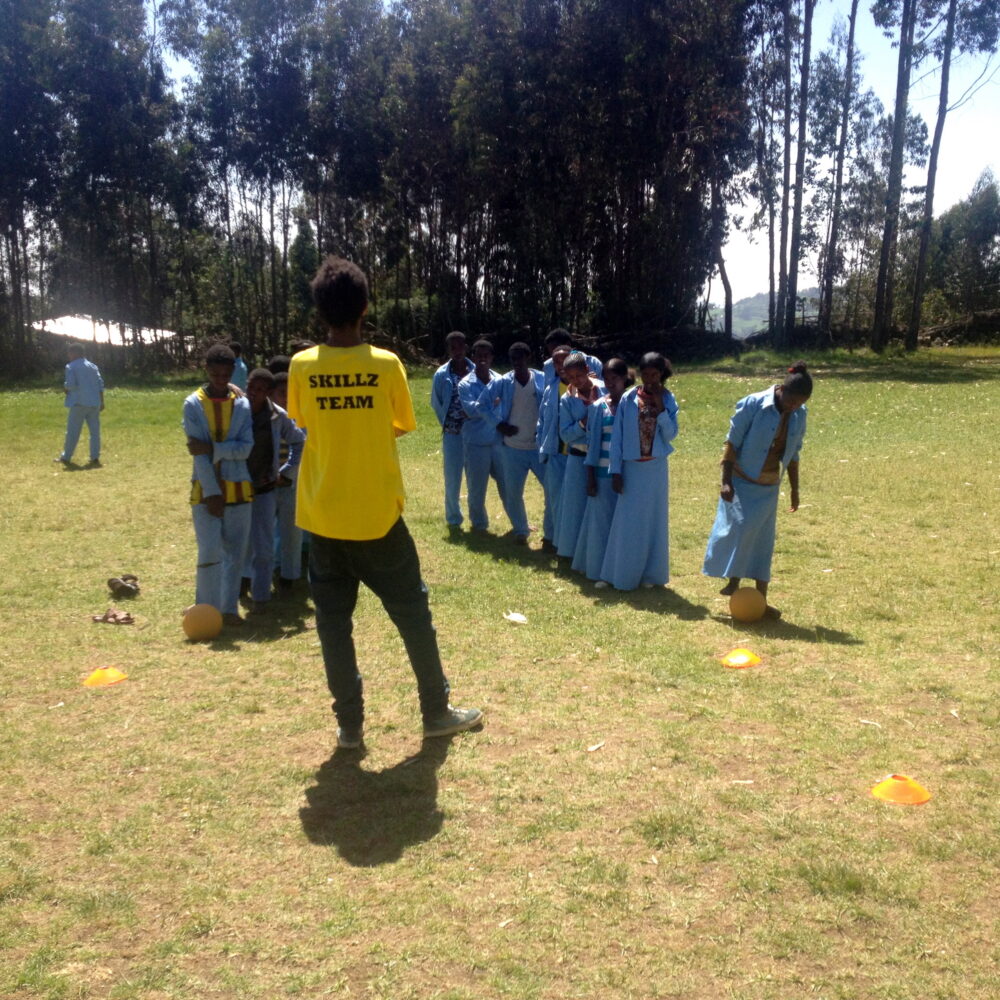
Grassroot Soccer supported delivery of two programs – Youth Action Kit, a peer-led life skills program, and Sports for Life, a sport-based HIV education program – in schools and youth clubs across Ethiopia, reaching over 1,000 young people aged 15-24 years.

What the study found

Participants showed improvements in HIV knowledge, attitudes toward gender equity, communication skills, and self-efficacy, along with positive shifts in sexual behaviors including delayed sexual debut and increased HIV testing.

Why this matters

Findings support the value of peer-led and sport-based approaches for improving HIV prevention outcomes among young people in Ethiopia.

DETAILED SUMMARY

Importance

  • Adolescents and young adults in Ethiopia face elevated risk of HIV infection but have limited access to youth-friendly prevention programs. This evaluation examined Youth Action Kit (YAK) and Sports for Life (SFL).

Objective

  • To evaluate whether YAK and SFL improve HIV knowledge, communication, and protective behaviors among mixed-gender adolescents and young adults over 12–15 months in Ethiopian schools and youth clubs.

Study details

  • Study design: Pre/post intervention study (mixed methods); no control group
  • Data collection tools: Pre- and post-surveys; knowledge tests; attitudinal scales; behavior questions; qualitative interviews
  • Participants: Mixed-gender adolescents and young adults aged 13–24 years (≈50% female); mean age at baseline 17.8 years (males) and 16.9 years (females), rising to 18.7 and 17.6 years respectively at endline
  • Implementation setting: Schools and youth clubs in Ethiopia (13-20% rural; 75–81% urban)
  • Study period: December 2005–April 2007

Intervention

  • Youth Action Kit (YAK): A peer-led HIV/AIDS communication and life skills package promoting knowledge, communication, and safe behaviors.
  • Sports for Life (SFL): A sport-based program using football games and discussions to promote abstinence condom awareness, gender-equitable norms, and HIV knowledge.

Results

  • Sample: 1,099 youth at baseline; 1,025 at endline; 40% of males and 42% of females completed both rounds.
  • Significant improvements (ranging from p < 0.05 to p < 0.001, depending on the specific measure) in HIV-related knowledge, attitudes toward abstinence and gender equity, reduced HIV-related stigma, self-efficacy to resist unwanted sex and peer pressure, and communication about HIV and condoms with partners, peers, and family members; not every individual indicator within these domains reached statistical significance.
  • Mean age at first sex increased significantly among males (16 to 18, p < 0.01) but did not change significantly among females (16 to 16); age of first sexual partner decreased significantly for both males (16 to 17, p < 0.05) and females (23 to 20, p < 0.05).
  • Transactional sex declined significantly among males (26% to 11%, p < 0.01); declines in female-reported sexual coercion (22% to 12%) and receiving something for sex (29% to 27%) were not statistically significant in the source data.
  • HIV testing increased significantly among both males and females.

Conclusions and Implications

  • Results demonstrate that YAK and SFL effectively improve HIV knowledge, gender-equitable norms, communication skills, and self-efficacy, and support protective sexual behaviors.
  • Findings support the value of sport-based and peer-led models in improving HIV prevention outcomes among youth.

Citation

Rajan R, Franca-Koh AC. Qualitative endline evaluation of Sports for Life and Youth Action Kit in Ethiopia. Addis Ababa, Ethiopia: Health Communication Partnership; 2007 Aug.
Rajan R, Nanda G, Franca-Koh AC, Orleans-Lindsay E. Creating a youth "movement" to combat HIV/AIDS: evaluation findings of the Youth Action Kit [and Sports for Life]. Health Communication Partnership Ethiopia; 2008 Oct 27.

Other Resources