
Economic empowerment, Health services, HIV, Resilience, Sexual & reproductive health

Mixed methods study of SKILLZ to support treatment adherence and employability among young people living with HIV in Malawi

2018

Brief Summary

Background

Young people living with HIV in Malawi face unique challenges as they move from pediatric to adult care, including staying on treatment, building independence, and finding economic opportunities. Few programs address both health and livelihood needs during this critical transition.

What Grassroot Soccer did

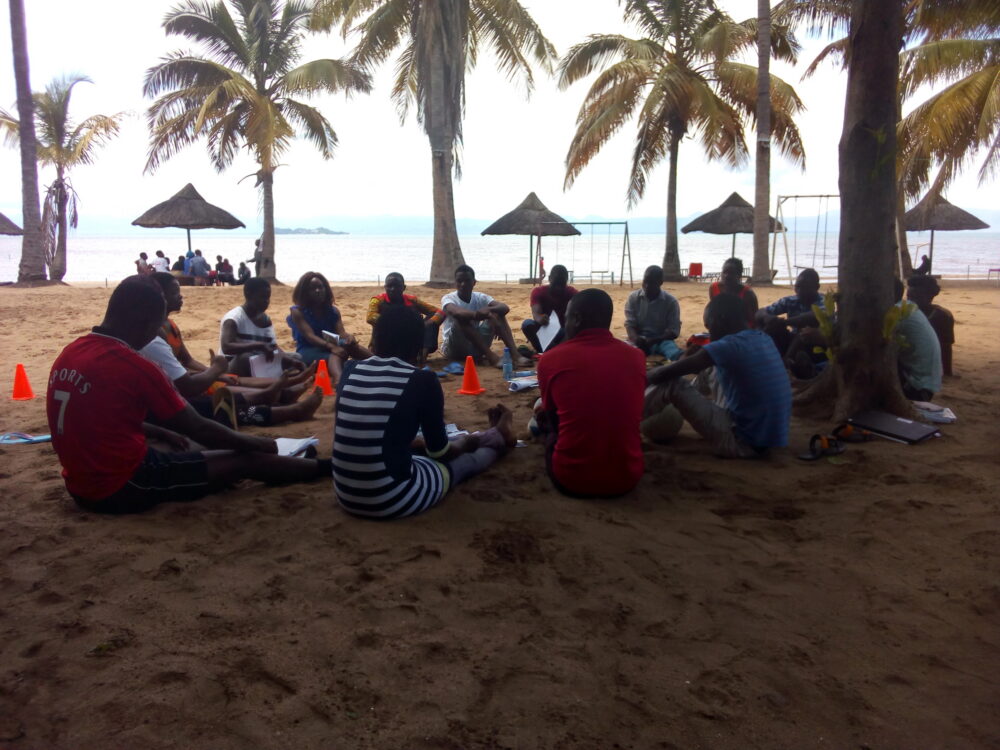
Grassroot Soccer implemented the Transition Training program — a 20-session curriculum covering HIV knowledge, self-care, employability, and computer literacy — at Teen Club programs in Lilongwe and Salima, Malawi, serving young people living with HIV.

What the study found

Participants showed modest improvements in HIV and sexual and reproductive health knowledge, confidence in disclosing their status, and perceived social support. Qualitatively, participants reported greater independence in managing their own treatment.

Why this matters

The Transition Training program shows early promise as an approach to support young people living with HIV through one of the most vulnerable periods in their care. Larger studies are needed to confirm these findings, but the results suggest that combining health and life skills support may help young people thrive beyond the clinic.

DETAILED SUMMARY

Importance

  • Young people living with HIV face significant challenges in Malawi during the transition from pediatric to adult HIV care, including maintaining treatment adherence, developing self-care skills and future orientation, and accessing employment opportunities. Few evidence-based interventions address both health and socioeconomic needs during this transition period. The Transition Training (T2) program was developed to address this.

Objective

  • To evaluate whether the Transition Training (T2) program improves HIV and sexual and reproductive health knowledge, treatment adherence self-efficacy, disclosure self-efficacy, and employability skills among young people living with HIV over a six-month intervention period in Lilongwe and Salima, Malawi.

Study details

  • Study design: Mixed methods study (convergent parallel design); no control group
  • Data collection tools: Pre- and post-questionnaires; focus group discussions (number not specified); in-depth interviews (number not specified)
  • Participants: Young adults living with HIV, median age 18–19 years, mixed gender, youth participants
  • Implementation setting: Teen Club programs at two clinic sites in Lilongwe and Salima districts, Malawi (urban and peri-urban)
  • Study period: October 2017 to April 2018

Intervention

  • Other – Transition Training (T2): A 20-session program with sessions focused on employability skills, self-care, employment and entrepreneurship, and computer literacy.

Results

  • 35 participants completed the program (Lilongwe n=15; Salima n=20)
  • Survey data show modest improvements in percent changes in most outcomes across sites: HIV and sexual and reproductive health knowledge (19.3% in Salima and 3.1% in Lilongwe); disclosure self-efficacy (6.3% in Salima, 2.5% in Lilongwe); and perceived social support (5.2% in Salima, 2.0% in Lilongwe)
  • “My adherence is now stable hence it is now easy for me to adhere to medication. Previously my parents were at the forefront to remind me while now I am doing it by myself without their support.” (Participant)

Conclusions and implications

  • The Transition Training program shows promising improvements in treatment self-management and social support among young people living with HIV, though results are limited by small sample size and the lack of a control group

Citation

Year: 2018

Authors: Cohen I, McKenney A, Coakley C, Bwanali M, Mandala E, Chang'ana A, Makuti S, Lee D, Kazembe PN

Cohen I, McKenney A, Coakley C, Bwanali M, Mandala E, Chang'ana A, Makuti S, Lee D, Kazembe PN. Building networks for young people living with HIV (YPLHIV) in Malawi using a multi-disciplinary approach: lessons learned from a peri-urban expansion [poster]. Presented at: 2nd International Workshop on HIV & Adolescence; 2018 Oct 10-12; Cape Town, South Africa.

Other Resources