

Health services, HIV, Resilience, Sexual & reproductive health

Delivery of two sport-based HIV prevention programs among conflict-affected youth in Liberia and Southern Sudan

2007

Brief Summary

Background

Young people aged 15-24 years account for a large share of new HIV infections globally, and conflict-affected youth face even greater barriers to accessing HIV education and prevention information.

What Grassroot Soccer did

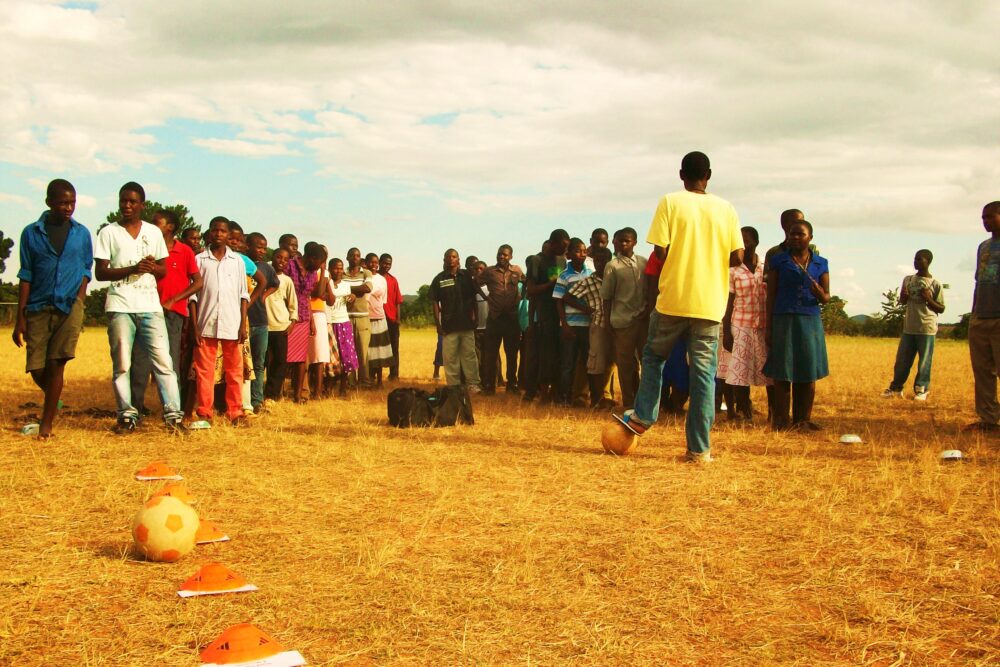
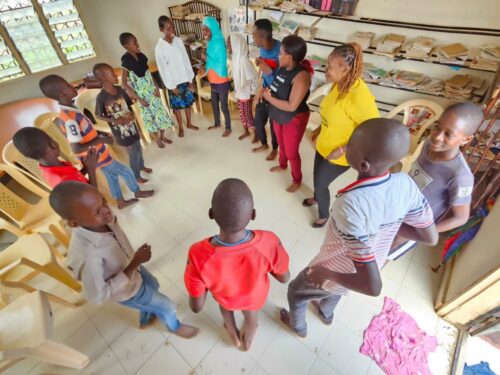
Grassroot Soccer supported Mercy Corps with delivering two sport-based HIV education programs in Liberia (Yes To Soccer) and southern Sudan (Sports for Peace and Life), reaching over 7,000 young people through games, activities, and peer-led discussions.

What the study found

Participants in both programs showed meaningful increases in HIV knowledge and protective attitudes, with female participants showing particularly notable gains.

Why this matters

Sport-based programs may be an effective tool for delivering HIV education to conflict-affected youth, offering a scalable model for future programs in similar settings.

DETAILED SUMMARY

Importance

  • Translating prevention program models into effective practice may curb the rise of the HIV/AIDS epidemic among the 15-24 year old age group, which represents 40% of all new infections. These interventions are meant to reach conflict-affected youth.

Objective

  • To encourage Sport for Development practitioners to develop plus sport programs that have non-sport, HIV/AIDS-related outcomes using two youth plus sport programs implemented in partnership with Grassroot Soccer as examples: Yes To Soccer (YTS, 2006) in Liberia and Sports for Peace and Life (SfPL, 2006-2007) in southern Sudan.

Study details

  • Study design: Pre/post intervention study. YTS pilot project embedded into existing life skills program. SfPL, a large-scale program, implemented through national- and state-level ministerial partners.
  • Data collection tools: Pre- and post-tests (16 questions)
  • Participants: YTS: 1,600 graduates aged 16-30 years (24 years on average) and 68 trained mentors. SfPL: 5,692 graduates aged 14-25 years (17 years on average) and 366 trained mentors.
  • Implementation setting: YTS: Liberia. SfPL: Southern Sudan.
  • Study period: YTS: 6 month period in 2006. SfPL: 9 month period from 2006-2007.

Intervention

  • Yes To Soccer (Liberia) and Sports for Peace and Life (Sudan): Provide basic HIV/AIDS information and life skills to youth participants through participatory games, activities, and discussions with groups of 20-30 youth from schools, sports teams, and other youth associations. After curriculum completion, mentors and youth participated in graduation ceremonies and sports tournaments to celebrate their accomplishments.

Results

  • On 16 HIV/AIDS-related questions, HIV knowledge and attitudes among youth increased by 27% (58% pre, 85% post) for YTS and by 12% (69% pre, 81% post) for SfPL.
  • The most considerable increases in correct responses were observed among the questions:
    • “I can tell if someone has HIV/AIDS by looking at him/her” (24% for YTS and SfPL), 
    • “A woman who has HIV/AIDS can give birth to a baby that does NOT have HIV” (36% for YTS and 20% for SfPL), and 
    • “HIV is the same as AIDS” (48% for YTS and 35% for SfPL). 
  • Noteworthy changes were also seen in questions regarding stigma (41% for YTS and 16% for SfPL) and abstinence (41% for YTS and 15% for SfPL).
  • When disaggregated by sex, female participants showed a higher percent increase in knowledge and protective attitudes in both Liberia and Southern Sudan.
  • Graduation rate: 95% for YTS, 73% for SfPL.

Conclusions and Implications

  • Pre/post tests suggest considerable gains in HIV/AIDS knowledge and protective attitudes among participants.
  • Lessons learned should inform future plus sport youth HIV/AIDS programs elsewhere.

Citation

Year: 2007

Authors: Streng M

Streng M. Commitment to practice: a playbook for practitioners in HIV, youth and sport. Portland (OR): Mercy Corps; 2007 Nov.

Other Resources