
Drug & alcohol use, Gender & violence, HIV
Baseline findings of a cluster-randomized trial of SKILLZ among Grade 9 South African learners
2013
Brief Summary
Background
Adolescents in South Africa face among the highest HIV prevalence rates in the world, with young females at nearly twice the risk of young males, driven in part by age-disparate sex, multiple partnerships, harmful alcohol use, and gender-based violence.
What Grassroot Soccer did
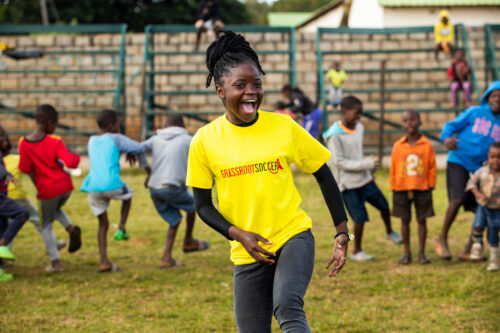
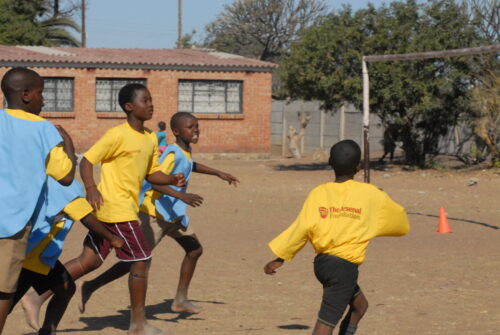
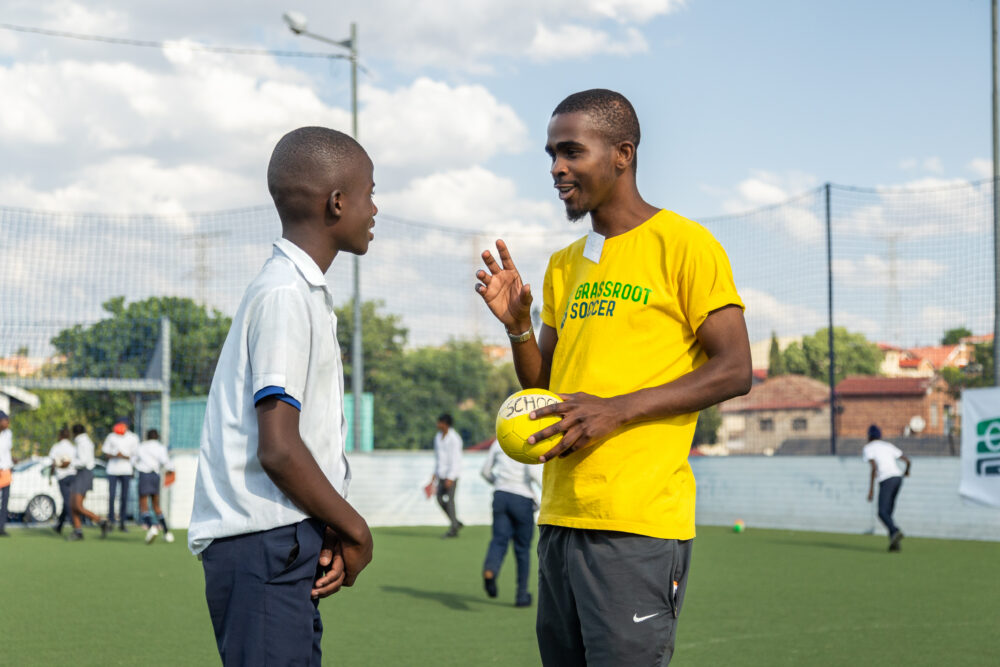
Grassroot Soccer's Generation Skillz program was tested in a two-year cluster-randomized trial across 46 public secondary schools in peri-urban Cape Town and Port Elizabeth, South Africa, comparing Coach-led soccer-based sessions with standard Life-Orientation classes taught by teachers. This poster reports baseline results from over 4,400 Grade 9 learners.
What the study found
At baseline, boys reported higher rates of harmful attitudes and behaviors than girls, including high numbers of sexual partners, intimate-partner violence and rape perpetration, and harmful alcohol use. A small age imbalance between study arms appeared to explain most other baseline differences between groups.
Why this matters
These baseline findings highlight the significant burden of risk behaviors and gender-based violence among South African adolescents before intervention and directly informed refinements to the Generation Skillz curriculum, which targets Grade 9 and 10 learners.
DETAILED SUMMARY
Importance
- HIV prevalence among 15–24 year-olds in South Africa is among the highest in the world, with young females facing nearly twice the risk of young males. Key drivers include age-disparate sex, multiple partnerships, harmful alcohol use, and gender-based violence; while rape and intimate-partner violence perpetration have been documented among adult South African men, little research had assessed prevalence of these behaviors among adolescents.
Objective
- To describe baseline knowledge, attitudes, and behaviors related to HIV risk and gender-based violence among Grade 9 learners in Cape Town and Port Elizabeth, South Africa, prior to a two-year cluster-randomized trial evaluating the effectiveness of the Generation Skillz sport-based HIV prevention intervention.
Study details
- Study design: Randomized controlled trial (baseline data)
- Data collection: Baseline surveys only (146-item self-administered questionnaire via Open Data Kit software on touchscreen mobile phones, available in English or Xhosa with audio assistance)
- Participants: Mixed-gender Grade 9 learners (median age 15 years)
- Implementation setting: 46 public secondary schools in peri-urban townships of Cape Town and Port Elizabeth, South Africa (peri-urban)
- Study period: Baseline surveys conducted March to September 2012, as part of a two-year trial
Intervention
- Other (Generation Skillz): A sport-based HIV prevention program delivered by trained Grassroot Soccer Coaches, using soccer themes, activities, and metaphors to spark conversations about HIV, sex, and violence among Grade 9-10 learners; compared with standard Life-Orientation classes delivered by teachers.
Results
- Sample: 4,485 Grade 9 learners assessed at baseline (2,173 intervention, 2,312 control).
- More control than intervention participants reported HIV stigma (27.4% vs. 23.8%, p=0.007), though this and other baseline differences lost statistical significance after adjusting for age and school-level clustering.
- More control than intervention females reported ever having had sex (45.1% vs. 40.9%, p=0.038), while more control than intervention males reported depressive symptoms (31.5% vs. 25.0%, p=0.001), an age-disparate partner in the last year (15.7% vs. 12.0%, p=0.06), perpetration of intimate-partner violence (37.6% vs. 33.4%, p=0.051), and perpetration of rape (29.1% vs. 23.7%, p=0.029).
- No significant baseline differences between groups in socio-economic status, HIV knowledge, self-efficacy, or number of sexual partners after adjustment.
- The control group was slightly older than the intervention group (mean age 15.8 vs. 15.5 years, p=0.071), and more control than intervention participants reported not living with both parents (67.8% vs. 64.1%, p=0.009); the vast majority of participants (96.3%) were Xhosa speakers.
Conclusions and Implications
- A small baseline age imbalance between study arms appears to explain most observed baseline differences, and outcome analyses for the main trial were adjusted for age.
- Distinct gender differences in knowledge, attitudes, and behavior were observed among Grade 9 learners, with males reporting higher rates of harmful attitudes and behaviors, including high numbers of sexual partners and high prevalence of intimate-partner violence, rape perpetration, and harmful alcohol use, underscoring these as important areas for intervention; Grassroot Soccer incorporated these findings into its Generation Skillz curriculum for Grade 9 and 10 learners.
Citation
Kaufman ZA, Kaufman EB, Dringus S, Weiss HA, Delany-Moretlwe S, Ross DA. Baseline results of a cluster-randomised trial assessing the effectiveness of sport-based HIV prevention in South African schools. Presented at: STI & AIDS World Congress; 2013 Jul 14-17; Vienna, Austria.
Partners
London School of Hygiene and Tropical Medicine
Wits Reproductive Health and HIV Institute
Funder
Comic Relief
MAC AIDS Fund (as part of the GOAL Trial)
Other Resources
Mixed methods evaluation of mental health integration into SKILLZ Core, SKILLZ Girl, and SKILLZ Guyz among adolescents in Zambia
Mixed methods evaluation of SKILLZ to expand community-based distribution of contraceptives among adolescents in Zambia