

Drug & alcohol use, Gender & violence, HIV, Self-efficacy & resilience

Mixed methods evaluation of SKILLZ to prevent sexual violence among adolescent boys in Zimbabwe

2023

Brief Summary

Background

Almost half of girls and women in Africa have experienced sexual violence, with devastating consequences including increased HIV incidence, early pregnancy, school dropout, and psychological morbidity; engaging boys and men is essential to preventing sexual and gender-based violence.

What Grassroot Soccer did

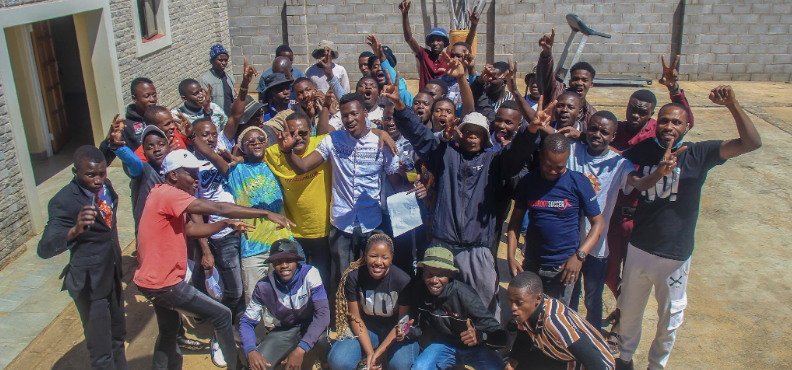
Grassroot Soccer partnered with No Means No Worldwide to co-design SKILLZ No Means No, adapting the standard No Means No Boys & Young Men curriculum with soccer-based activities and additional content on substance abuse, peer pressure, and HIV/STI prevention, delivered by 32 trained near-peer instructors to boys aged 9-17 in Tsholotsho and Nkayi Districts, Zimbabwe.

What the study found

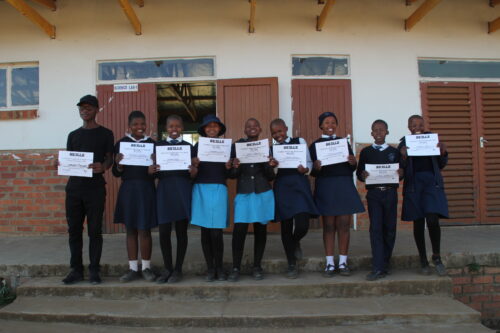
The program was feasible and relevant to implement, achieving a 100% participant retention rate, and boys reported applying skills like bystander intervention and challenging harmful gender norms in daily life. A larger follow-up survey also found bigger gains in knowledge and attitudes, and higher retention, compared to the standard curriculum.

Why this matters

These findings suggest that adapting evidence-based violence prevention curricula with sport-based delivery can improve engagement, retention, and learning among adolescent boys, supporting continued testing and further contextualization for younger and older participants.

DETAILED SUMMARY

Importance

  • Sexual violence is highly prevalent in Africa and closely linked to HIV risk, early pregnancy, and harmful gender norms. Programs targeting boys are critical, yet there is limited evidence on sport-based interventions that engage boys in preventing violence and promoting healthy behaviors.

Objective

  • To assess the feasibility, relevance, and effectiveness of the SKILLZ No Means No curriculum, including boys’ self-efficacy around communication and seeking support, and to compare it to No Means No Worldwide’s standard Boys & Young Men curriculum among adolescent boys in Zimbabwe.

Study details

  • Study design: Mixed methods study (with comparator curriculum); no control group.
  • Data collection tools: Attendance registers; pre- and post-intervention questionnaires; focus group discussions; key informant interviews.
  • Participants: Boys aged 9-17 years; near-peer instructors.
  • Implementation setting: Schools and community settings in Tsholotsho and Nkayi Districts, Zimbabwe (rural).
  • Study period: August 2022–early 2023.

Intervention

  • SKILLZ No Means No: A 12-hour soccer-based curriculum adapted from No Means No Boys & Young Men, delivered through interactive sessions combining soccer activities and discussions on sexual violence prevention, gender norms, HIV/STIs, and substance abuse; implemented by trained near-peer instructors in school/community settings.

Results

  • In an initial pilot phase (October–December 2022), 909 boys enrolled and graduated (100% retention); a pre/post questionnaire attempt fell far short of its target sample (107/102 vs. a target of 455) and was excluded from analysis due to reliability concerns, so pilot findings rely primarily on qualitative data.
  • Boys and instructors reported applying skills learned, including bystander intervention, avoiding violence, and challenging harmful gender norms, with increased comfort disclosing bullying and abuse to instructors (though no disclosures of sexual violence occurred during the pilot).
  • Quotes: 
    • “I saw two boys fighting. I pretended to be running away from a dog and I distracted them.” (Youth participant)
    • “I used to disrespect girls but now I treat them equally and it is my responsibility to protect them.” (Youth participant)
  • In a subsequent, larger survey (n=1,623) in early 2023, results demonstrate a 129% increase in knowledge (33% to 75%) and an 84% increase in attitudes (41% to 76%) among SKILLZ No Means No participants.
  • Compared to NMNW’s standard curriculum (n=567), SKILLZ No Means No participants showed roughly double the knowledge gain (129% vs. 75%) and triple the attitude gain (84% vs. 30%), and Bantwana Zimbabwe reported a higher graduation rate (100% vs. 82%).

Conclusions and Implications

  • SKILLZ No Means No appears feasible to implement and relevant to the risks boys face in their communities, with reported gains in bystander-intervention skills, gender-equitable attitudes, and self-efficacy around communication and help-seeking; the later, larger survey lends preliminary quantitative support to these qualitative findings and suggests possible added value over the standard curriculum, though the pilot’s own small-sample data were unreliable.
  • Future training will include additional curriculum contextualization for younger boys in rural areas, more content on conflict resolution, and expanded engagement with family and community stakeholders to broaden impact.

Citation

Ncube H, Dube C, Eriduluh P, Mpofu F, Ngwenya G, Mubanga C, Lee D. Innovation and collaboration through sport: adaptation and contextualization of two evidence-based HIV and violence prevention programmes for boys in Zimbabwe [poster]. Presented at: International Conference on AIDS and STIs in Africa (ICASA); 2023 Dec 4-9; Harare, Zimbabwe.

Other Resources