

Health services, HIV, Sexual & reproductive health

Cluster randomized controlled trial of SKILLZ Girl among adolescent girls in Zambia

2025

Brief Summary

Background

Adolescent girls in sub-Saharan Africa face disproportionately high risk of HIV and unintended pregnancy, but effective, integrated interventions that increase actual uptake of HIV testing and contraception—rather than just awareness or intent—remain rare and rigorously untested.

What Grassroot Soccer did

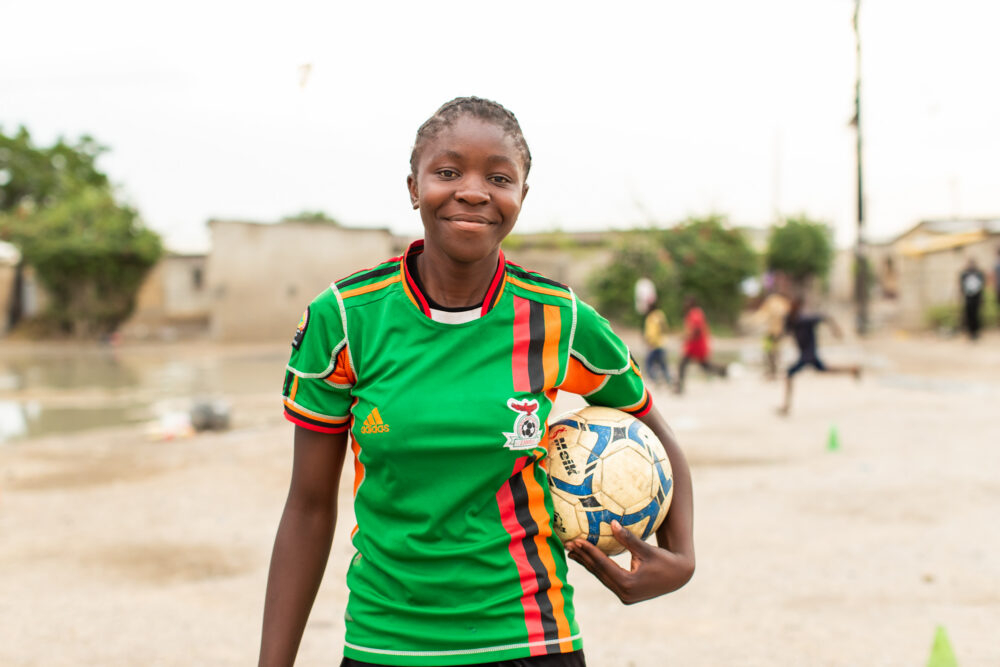
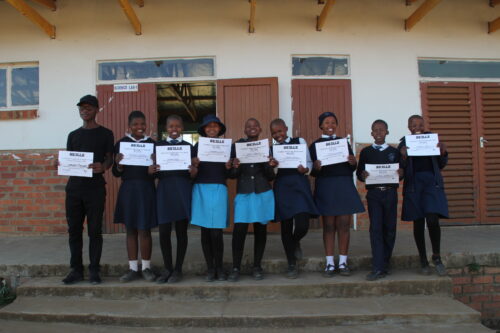
Grassroot Soccer's SKILLZ Girl program was evaluated in a cluster randomized controlled trial across 46 secondary schools in Lusaka, Zambia. Coaches delivered 12 after-school sessions on sexuality and sexual and reproductive health, culminating in a "graduation" soccer event with a pop-up clinic offering HIV testing and contraception, followed by Coach-assisted linkage to care and community-based distribution of self-testing kits and contraceptives.

What the study found

Girls who received SKILLZ Girl were significantly more likely than girls in control schools to report HIV testing and contraceptive use at both 6 and 12 months, with effects on HIV testing adoption and reduced discontinuation of both HIV testing and contraception sustained over a year.

Why this matters

These findings provide some of the first randomized controlled trial evidence that a school-based, sports-delivered intervention can shift actual HIV testing and contraceptive behavior—not just knowledge or attitudes—among adolescent girls, even amid pandemic-related disruptions to schools and health services.

DETAILED SUMMARY

Importance

  • Adolescent girls in sub-Saharan Africa face disproportionately high risk of HIV and unintended pregnancy. Effective, integrated interventions that increase both HIV testing and contraceptive uptake are urgently needed, yet existing evidence for behavioral interventions has largely been limited to awareness-, knowledge-, and intent-based outcomes rather than measured service use.

Objective

  • To evaluate whether SKILLZ Girl compared with standard-of-care sexuality education improves self-reported HIV testing and contraceptive uptake among adolescent girls aged 16 years and older over 12 months in secondary schools in Lusaka, Zambia.

Study details

  • Study design: Randomized controlled trial (cluster-randomized; intention-to-treat analysis)
  • Data collection: Self-administered baseline, 6-month, and 12-month questionnaires; Coach attendance registers/administrative records
  • Participants: Female Grade 11 students aged 16 years and older (mean age 17.3 years), mixed HIV status
  • Implementation setting: 46 secondary schools across Chilanga, Chongwe, Kafue, and Lusaka districts, Zambia (urban and rural)
  • Study period: March 2021 to January 2023 (12-month follow-up per participant)

Intervention

  • SKILLZ Girl: 12 after-school sessions of sexuality and sexual and reproductive health education delivered by trained Coaches, culminating in a “graduation” soccer event where a pop-up clinic offered HIV testing and contraception; participants testing HIV-positive received Coach-assisted linkage to HIV care, group psychotherapy, or youth-friendly services; community-based distribution of HIV self-testing and contraceptives followed the core program.

Results

  • Sample: 2,153 girls enrolled (1,134 intervention, 1,019 control); 91–92% surveyed at 6- and 12-month follow-up. In intervention schools, 79% attended at least one SKILLZ Girl session and 71% graduated (8+ sessions).
  • At 6 months, 59% of intervention participants versus 37% of control participants reported HIV testing in the previous 6 months (risk difference: 22 percentage points, 95% CI: 14, 29), an effect sustained at 12 months (54% vs. 39%; 15 percentage points, 95% CI: 7, 23).
  • Contraceptive use was higher among intervention participants at 6 months (37% vs. 30%; 6 percentage points, 95% CI: -2, 14, not significant) and reached significance at 12 months (35% vs. 26%; 8 percentage points, 95% CI: 1, 15).
  • Intervention participants were more likely to newly adopt HIV testing and contraception and less likely to discontinue HIV testing by 12 months (risk difference: -10%, 95% CI: -16, -4).
  • HIV self-testing uptake remained low (under 10%) despite curriculum emphasis, while blood-based testing, condom use, and emergency contraception showed the largest treatment effects.
  • SKILLZ Girl cost $472 per participant, equivalent to $2,006 per additional girl receiving an HIV test and $2,362 per additional girl using contraception.

Conclusions and Implications

  • SKILLZ Girl produced sustained increases in self-reported HIV testing and contraceptive use among in-school adolescent girls, even amid COVID-19-related disruptions, offering rare randomized controlled trial evidence of behavioral (not just knowledge-level) impact.
  • Findings support integrating sexual and reproductive health education with direct, convenient service access as a scalable model, while highlighting the need for further tailoring to address persistently low HIV self-testing uptake and overall contraceptive use relative to unmet need.

Citation

DOI

Chiu C, Mulubwa C, Mkandawire B, Musonda M, Katota N, Chipungu J, et al. Evaluation of the SKILLZ intervention to promote HIV testing and contraception uptake in adolescent girls in Lusaka, Zambia: A cluster-randomized trial. PLOS Glob Public Health. 2025;5(10):e0005375. https://doi.org/10.1371/journal.pgph.0005375

Other Resources