

Gender & violence, Health services, HIV, Resilience, Sexual & reproductive health

Mixed methods study of SKILLZ Street Plus among adolescent girls in South Africa

2017

Brief Summary

Background

Intimate partner violence and gender inequality remain serious challenges for adolescent girls in South Africa, affecting their safety, relationships, and health outcomes.

What Grassroot Soccer did

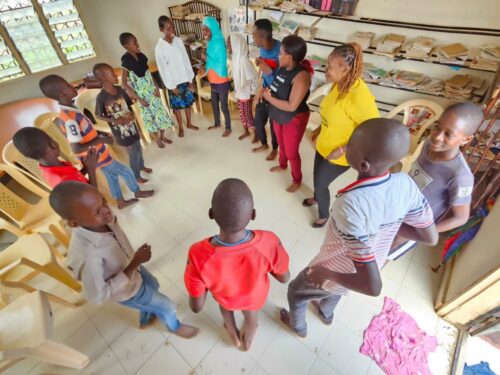
Grassroot Soccer implemented SKILLZ Street Plus with 200 girls aged 13–16 in Soweto, South Africa. The 14-session program combined soccer with education on healthy relationships, gender-based violence, and HIV prevention, including mixed-sex activities with young men.

What the study found

Participants showed significant increases in awareness of support services for sexual violence. Findings also pointed to opportunities to strengthen how coaches facilitate personal reflection on complex social challenges.

Why this matters

These results highlight both the promise of sport-based approaches for connecting girls to critical health services and the importance of ongoing program refinement to deepen impact on gender equity and safety.

DETAILED SUMMARY

Importance

  • Intimate partner violence (IPV) and gender equality (GE) operate at individual, interpersonal, community, and societal levels in South Africa.

Objective

  • To assess the success of the SKILLZ Street Plus program at improving 13-16-year-old girls’ abilities to choose gender-equitable intimate partners and to both prevent and address violence in their lives.

Study details

  • Study design: Mixed methods design (process and outcomes evaluation)
  • Data collection tools: Process evaluation assessing curriculum revision, training of female Coaches, curriculum delivery to participants, soccer training and competitions, information conveyed/awareness raised on support services for violence and HIV, and efficiency of delivering the gender-equity workshops with young men; outcomes evaluation using focus group discussions (FGDs), individual interviews, rapid ethnographies and observations, attendance records, and pre/post surveys
  • Participants: 200 girls
  • Implementation setting: Soweto, South Africa (project sites also exist in Khayelitsha and Alexandra, South Africa, but this outcomes evaluation was based on Soweto)
  • Study period: 2016-2017

Intervention

  • SKILLZ Street Plus (SSP): Combines soccer with education on intimate partner choice, gender-based violence, and HIV/AIDS prevention in 14 sessions delivered by female Coaches, including 7 mixed-sex activities.

Results

  • Participants’ knowledge of the Thuthuzela Care Centres, which provide a range of services for victims of sexual violence and associated STIs, increased (32.9% to 84.2%)
  • Some girls left abusive relationships for relationships with greater levels of gender equality; while evaluations show that SSP was delivered efficiently, it is uncertain whether girls’ relationship choices are attributable to SSP
  • Findings indicate that gender equitable relationships may be related to minimizing violence, material benefit from relationships, and an understanding of patriarchal society
  • While many SSP participants demonstrated excellent knowledge of services for IPV and HIV/AIDS, many complained about the quality of care of nurses and police

Conclusions and implications

  • GRS should attempt to strengthen its relationships with key institutions like schools, clinics, police stations, and community leadership forums
  • The program showed an observed strength and weakness: Coaches recited scripted lessons in search of pre-decided answers, which ensured participants’ acquisition of desired knowledge but limited personal exploration of difficult socio-emotional challenges

Citation

Year: 2017

Authors: Cooper A, Moolman B, Matandela M

Cooper A, Moolman B, Matandela M. Outcomes evaluation: SKILLZ Street Plus, a Grassroot Soccer initiative [report]. Pretoria: Human Sciences Research Council; 2017.

Other Resources