

Health services, HIV, Resilience, Sexual & reproductive health
Quasi-experimental study of SKILLZ adapted for preadolescents in St. Lucia
2009
Brief Summary
Background
In the 2000s, young people in St. Lucia faced a growing HIV/AIDS epidemic, and existing programs had struggled to effectively build knowledge and awareness among youth.
What Grassroot Soccer did
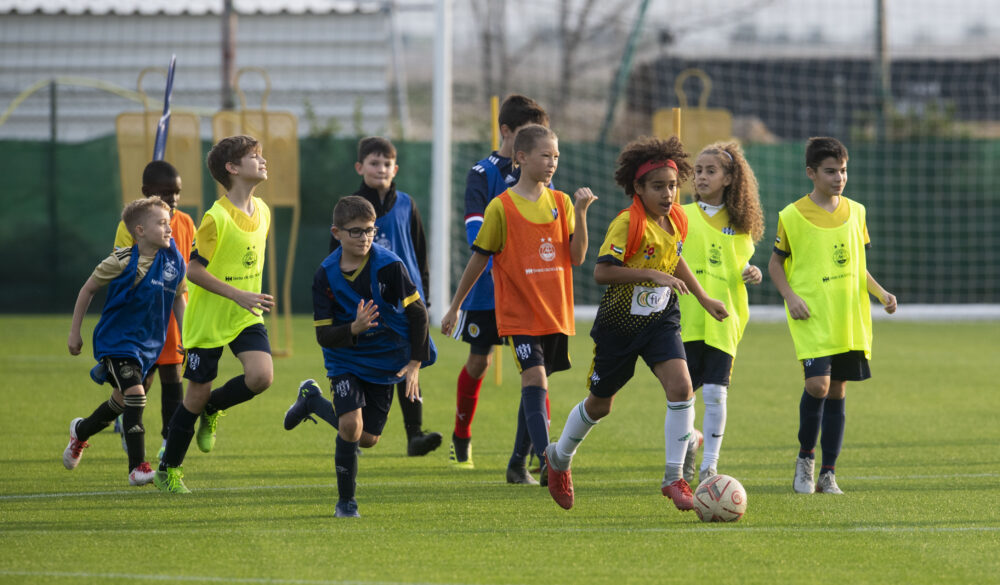
University students based their Football for Lives program on existing Grassroot Soccer programs. Football for Lives was implemented with 5th and 6th graders (ages 10-12 years) at two primary schools in Mon Repos village, St. Lucia, using games-based activities to teach HIV/AIDS education.
What the study found
Students who participated showed greater gains in HIV/AIDS knowledge than those who did not, with some of those gains still present five months after the program ended.
Why this matters
Grassroot Soccer programming can be culturally adapted to reach young people in the Caribbean and support continued investment in games-based health and HIV education.
DETAILED SUMMARY
Importance
- Programs in St. Lucia have been ineffective in addressing the growing HIV/AIDS epidemic. This thesis assessed a program modeled after Grassroot Soccer’s methodology.
Objective
- To evaluate whether the Football for Lives intervention improves 5th and 6th grade students’ HIV/AIDS knowledge at two primary schools in Mon Repos village, St. Lucia, in comparison to a control group of students who did not receive the Football for Lives curriculum.
Study details
- Study design: Quasi-experimental (pre/post intervention study with control group)
- Data collection tools: Pre-, post-, and 5-month follow-up questionnaires (14 questions); 3 in-depth interviews and 4 training session observations to evaluate Coaches’ training
- Participants: 5th and 6th graders (aged 10-12 years)
- Implementation setting: Mon Repos Combine and Patience Primary Schools, Mon Repos village, St. Lucia
- Study period: Fall 2007 through summer 2008. Follow-up in January 2009.
Intervention
- Football for Lives (FfL): Modeled on Grassroot Soccer’s programming. Used games-based activities delivered by University of Vermont students.
Results
- Sample: N = 84 intervention group respondents from two schools (51.2% female), 38% (N = 32) retained at 5-month follow-up. N = 10 control group respondents.
- Qualitative: Peer education was perceived to be an effective model, allowing for community-specific adaptation, accountability, and program longevity. Location, gender of trainer, gender of children, and confidence of trainer affect program effectiveness.
- Quantitative: Intervention participants showed an 11.6% increase in correct responses from pretest to posttest (69 to 77% correct), and a 2.9% increase in correct responses from pretest to five-month follow-up (69 to 71% correct). Control group participants showed a 4.7% increase in correct responses from pretest to posttest (64 to 67% correct), but did not have a 5-month follow-up.
Conclusions and Implications
- Results suggest that students’ knowledge of HIV/AIDS increased as a result of the FfL program, and the qualitative assessment confirmed FfL’s theoretical basis and cultural appropriateness in St. Lucia. A longitudinal study is needed for a rigorous assessment of program effectiveness.
Citation
Year: 2009
Authors: Wardell C
Wardell C. Implementation and evaluation of a sports-based HIV/AIDS prevention education program for preadolescents in St. Lucia [master's thesis]. Burlington (VT): University of Vermont; 2009.
Partners
University of Vermont
New York University
University of Illinois
Grassroot Soccer
Ministry of Health (St. Lucia)
Ministry of Education (St. Lucia)
St. Lucia HIV/AIDS Secretariat
Funder
Unknown
Other Resources
Cross-sectional study of Digital MindSKILLZ among mobile phone users in six sub-Saharan African countries
Cluster randomized controlled trial of SKILLZ Girl among adolescent girls in Zambia: Effects on sexual and reproductive empowerment