

Gender & violence, Health services, HIV, Sexual & reproductive health, Substance use

Baseline findings from a study of SKILLZ Guyz among adolescent boys in Nigeria

2018

Brief Summary

Background

Adolescent boys in Nigeria have limited access to accurate sexual and reproductive health information, and existing government programs often fail to reach out-of-school youth. Addressing boys' health needs and gender attitudes is critical to reducing HIV risk and violence against girls.

What Grassroot Soccer did

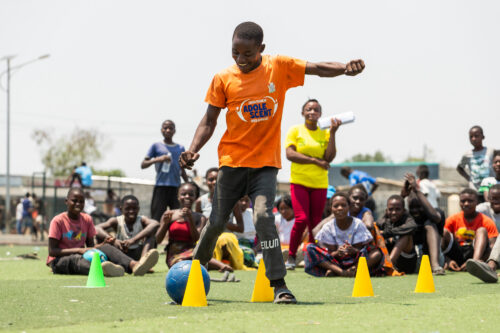
Grassroot Soccer collaborated with partners to conduct a baseline study to understand the needs of adolescent boys alongside qualitative data collection to understand early perceptions of the implementation of SKILLZ Guyz. This sport-based program is designed to improve sexual and reproductive health knowledge and promote gender-equitable attitudes among adolescent boys in Nigeria.

What the study found

At baseline, levels of HIV knowledge and condom use were low, and rates of violence toward female partners were high. Qualitative findings showed promising early shifts immediately after the program. Coaches and participants alike reported changes in attitudes and behaviors, including better anger management and reduced violence.

Why this matters

These findings highlight a critical gap in health programming for adolescent boys and underscore the potential value of the SKILLZ Guyz program for addressing gender-based violence and sexual and reproductive health.

DETAILED SUMMARY

Importance

  • There is a gap in addressing the unique sexual and reproductive health needs of adolescent boys and men. The government-run health programs do include an HIV component but it contains limited information and does not reach out of school youth.

Objective

  • To evaluate whether SKILLZ Guyz improves HIV and sexual and reproductive health knowledge, condom use intentions, and gender equitable norms among in-school adolescent boys and out-of-school adolescent boys over a 5 month period in Nigeria.
  • To identify critical components to implementation fidelity and delivery.

Study details

  • Study design: Mixed methods, no control group
  • Data collection tools: Pre-questionnaires (baseline), focus group discussions with Coaches, in-depth interviews with program staff
  • Participants: 140 in-school youth participants (mean age: 14.68 years) and 118 out-of-school youth participants (mean age 16.06 years), Coaches, program staff
  • Implementation setting: Nigeria
  • Study period: February–July 2018

Intervention

  • SKILLZ Guyz: Ten 90 minute sessions delivered once or twice a week aiming to shift gender norms that have negative health impact for adolescents, such as perpetration and experience of violence, as well as an additional graduation activity. Sessions are conducted by male Coaches trained in youth facilitation and program content.

Results

  • 258 youth participants in total (with a mean age of 14.8 years); 140 were in-school youth, 118 were out of school youth
  • 29% (76) reported having sexual intercourse
  • 31% (23) reported using a condom at last sex
  • 34% (87) correctly identified HIV prevention techniques
  • 48% (118) had insulted a female partner/deliberately made her feel bad about herself
  • 38% (95) had threatened or hurt a female partner
  • 33% (81) had used alcohol
  • In post-intervention FGDs, coaches reported positive behavior and attitude changes in participants, even among those who had engaged in unhealthy behaviors previously
  • Coaches themselves also reflected on and changed their own negative SRH behaviors and gender attitudes, making them better role models
  • Participants reported using techniques to improve anger management and reduce use of physical violence

Conclusions and implications

  • Low levels of HIV and SRH knowledge, combined with high levels of violence against girls and low condom usage, demonstrate a critical gap in accurate information and life skills building for adolescent boys, and the opportunity to intervene early before sexual debut
  • Qualitative findings demonstrate initial positive program effects on both participants and facilitators, indicating the promise of this intervention in addressing the SRH needs of adolescent boys

Citation

Year: 2018

Authors: Akanegbu C, Akinwale O, Akinpelu O, Clowes A, Miller S, Lee D, Coakley C

Akanegbu C, Akinwale O, Akinpelu O, Clowes A, Miller S, Lee D, Coakley C. Addressing adolescent boys' unique sexual and reproductive health needs in Nigeria: baseline findings from a sport-based programme evaluation [poster]. Presented at: 2nd International Workshop on HIV & Adolescence; 2018 Oct 10-12; Cape Town, South Africa.

Other Resources